
Realistic trauma training helps West Herts Teaching Hospitals teams prepare for the toughest emergencies
"This is a procedure that most clinicians will rarely encounter during their careers, but when it is needed, there is no time to learn on the job”
Emergency teams at West Herts Teaching Hospitals NHS Trust are using a new specialist trauma manikin to practise a life-saving procedure, preparing them for real emergencies when there are only seconds to act.
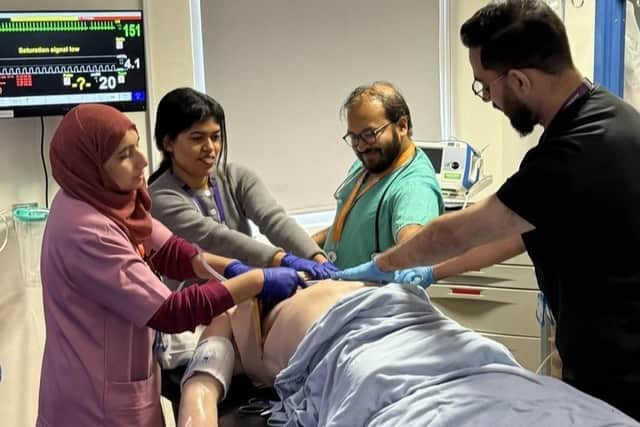

The specialist training manikin lets teams practise an emergency chest operation known as the “clamshell” procedure.
The procedure involves rapidly opening the chest to access the heart and lungs, often in situations where a patient has suffered a serious stab wound or traumatic injury. Relieving that pressure within minutes can be a patient's only chance of survival.
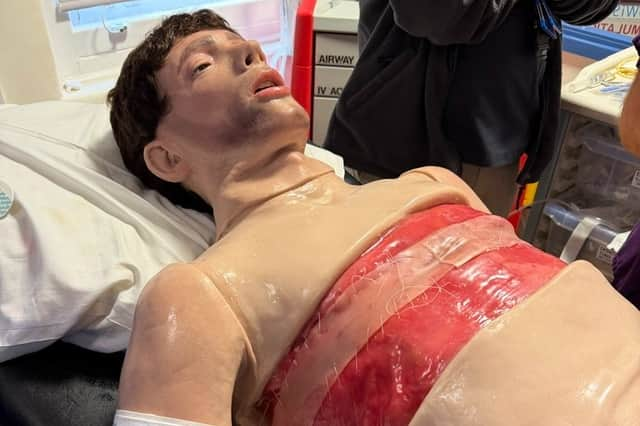
Although rarely needed, a clamshell procedure can be the difference between life and death for patients who arrive in cardiac arrest following severe chest trauma.
The training gives clinicians at West Hertfordshire Teaching Hospitals NHS Trust a realistic environment in which to practise the technical skills, rapid decision-making and teamwork needed for one of emergency medicine’s most complex and time-critical procedures.
As a general hospital rather than a major trauma centre, West Herts sees relatively few cases requiring emergency clamshell procedure. However, rising levels of knife crime and serious trauma nationally make it increasingly important that clinical teams maintain these critical skills.
The simulations are designed to mirror real-life major trauma incidents. Paramedics from the local ambulance service are involved to make the experience as realistic as possible.
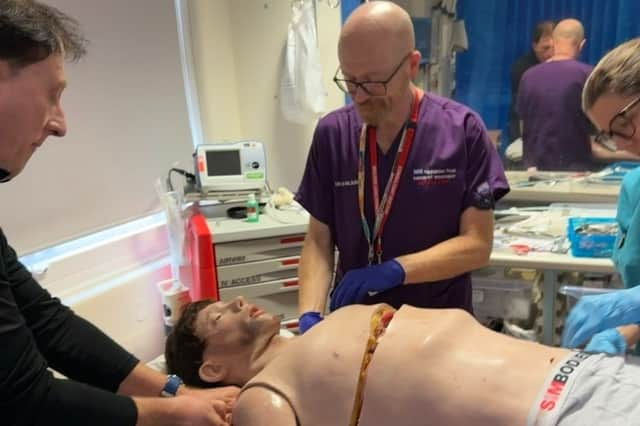
The specialist trauma manikin is the most advanced of its kind used by the Trust allowing teams to recreate realistic trauma scenarios.
Following each scenario, the manikin is repaired on site using specialist silicone so it could be used again for the next team.
Dr Daniela Burlacu, Clinical Director for Emergency Medicine, who designed and coordinated the simulation training of the manikin for the Trust, said: "This is a procedure that most clinicians will rarely encounter during their careers, but when it is needed, there is no time to learn on the job.
"This is another step forward in the way we train our teams. Ultimately, it is about giving our clinicians the confidence and capability to deliver the very best care when every second counts."