
Changes to planning legislation come under fire at meeting of Hertfordshire council
Changes to planning legislation that are expected to reduce the number of planning applications determined in public and by councillors have come under fire at a meeting of Hertfordshire County Council.
Under current arrangements, councils operate their own schemes to determine whether individual planning applications are determined by a committee, in public, or by council employees, in private.
As part of the scheme at Hertfordshire County Council, consideration is given to the level of objection, objections from particular consultees and call-ins from local councillors.
From October 31, it will be new national rules that determine which planning applications can be delegated to the council’s planning officers and which can be referred to committee.
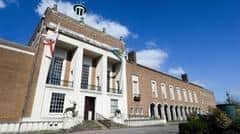

On October 20 the county council agreed to the constitutional changes required by the legislation.
At the meeting, it was reported to councillors that under the new scheme of delegation, planning applications will be split into two groups - schedule one and schedule two.
According to the new legislation, schedule one applications - which include all householder applications, minor commercial applications and minor residential applications - must be determined by planning officers.
Schedule two applications - which include major, strategic or sensitive developments - will be presumed to be determined by planning officers, unless the nominated officer and the nominated councillor agree that it should be referred to committee.
During the meeting, councillors from Liberal Democrat, Conservative, Reform and the Green groups all spoke out against the changes.
But ultimately the majority of councillors agreed to the constitutional changes, after being warned that failure to do so would mean the council was not compliant with the law as it would stand - and decisions would be open to challenge.
Proposing the constitutional changes “with a heavy heart”, Cllr Nigel Taylor (Liberal Democrat, Berkhamsted) suggested the power of local councils to control development in their areas had already been gradually usurped by central government.
He spoke in support of existing rights of the council to ‘call in’ applications “when they are important to residents”.
But he said the law had been changed, and warned councillors that rejecting the changes to the constitution would lead to the prospect of all decisions being challenged and appeals lost, at the council’s expense, because they were not compliant with that law.
Opposing the changes to the legislation, Cllr Tony Kingsbury (Conservative, Welwyn) said they represented a “real loss of local democratic involvement in planning”, that had “long been important to our communities.”
He suggested there was a “considerable irony” between the Government’s focus on devolution and the imposition of a national scheme.
“We hear repeatedly from this Government about devolution, about taking power away from the centre and giving communities greater control over the decisions affecting them,” he said.
“Yet Whitehall is imposing a national scheme which reduces local councillors’ discretion and makes it harder for elected councillors to bring planning decisions before a public committee.
“That doesn’t feel much like devolution to me.”
Cllr Saul Jacob (Reform, Borehamwood South) also raised concerns about the number of planning decisions that would be made in private, as a result of the new legislation.
He said it would hand over their “fundamental local democratic responsibility to behind-closed-doors decisions by officers”.
He said that under this new scheme almost every residential, commercial or householder application would be taken “entirely out of the hands of the elected representatives”.
But rather than making the process more efficient, he suggested it was “silencing the local voice”.
He told councillors: “Government sets the direction, but our primary duty in this room isn’t to make life easier for Government efficiency or Government targets or central planners.
“It is to guard local democracy and represent our residents.
“If we adopt these changes without making a firm, clear stand on record today, we are voluntarily surrendering the core reason people vote for us - to ensure local eyes oversee local impacts.”
Cllr Rachel Carter (Green, Hertford, St Andrew’s) said the council could not be put in a position where it was not legally compliant.
But she acknowledged that all councillors would be “extremely unhappy” about the loss of local representation and the loss of call-in powers.
However, Cllr Alistair Willoughby (Labour, Baldock and Letchworth East) pointed to the differences in planning processes in different areas of the country, suggesting that adding some consistency was “quite important”.
He stressed to councillors that the vast majority of planning decisions are already delegated to officers, and said the “greatest thing” councillors could do now was to make sure Local Plans and Spatial Development Strategies had “the right guidance for officers for our areas.”
During the debate, leader of the Opposition Cllr Richard Roberts (Conservative, Kings Langley) said it was an “absolute abomination” and that he “couldn’t be more vehemently against this.”
Meanwhile, the executive member for environment, transport and growth, Cllr Paul Zukowskyj (Liberal Democrat, Hatfield South), said it was “an absolute dog’s breakfast”.
At the end of the debate, the constitutional changes were passed by the county council, with 38 councillors voting in favour and 26 against.
The majority of planning applications are determined by the county’s 10 district and borough councils.
The county council has responsibility for a relatively small number of applications, including quarries, waste facilities and schools.