
Saturn in opposition: The ringed planet will be visible to the naked eye this weekend - how to spot it

This will be the closest glimpse of Saturn available this year 🪐
- Saturn, Earth and the Sun will line up later this weekend
- This will give us likely the clearest view of the planet available all year
- Experts say it will even be visible to the naked eye
- But one of its most iconic features will be a little harder to make out
Night sky lovers eager to get a clear look at some of the other planets we share our solar system with are in for a treat.
Saturn will make a particularly brilliant appearance amongst the stars this weekend, according to the Royal Observatory’s night sky highlights for September. It will appear so brightly, that the yellow-hued planet should be easy to spot even without any visual aids.
It isn’t going to be the only one on show in the coming weeks either, experts say, with another of our distant celestial neighbours set to follow soon after. But when exactly will UK stargazers be able to spot Saturn, and why is it going to be so bright?
Here’s everything you need to know:
When will I be able to spot Saturn this week?
The Royal Observatory says Saturn will be “at its best” this Sunday night (September 21). It should be easy to see even without a telescope or any special equipment, anywhere the sky is clear.
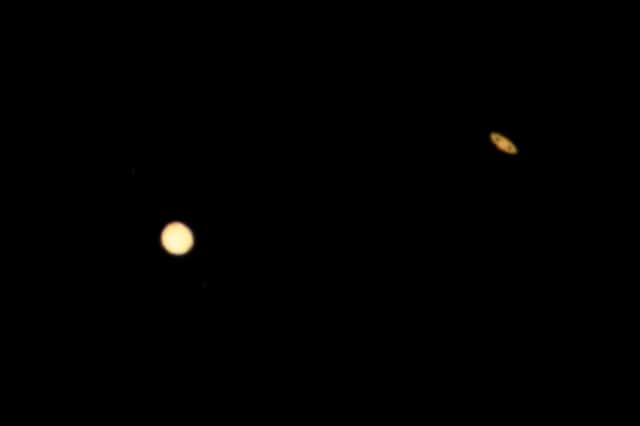
The planet will appear pale yellow, and will rise in the east. It can be found within the constellation of Pisces – you can use a free stargazing app like Stellarium to help you locate it, if need be. However, Saturn’s famous rings won’t be fully visible. This is because it will be at a point in its rotation where it is edge-on to us, the observatory adds, “so unfortunately the rings will appear very narrow”.
To check what visibility will be like where you live, we’d recommend checking the Met Office’s cloud cover map towards the end of the week. You can find this online here.
Why will it be so easy to see?
The clear views of Saturn are because it will be making its closest pass to us here on Earth for 2025, giving us the clearest and brightest view we’ll get all year. It will be ‘in opposition’ this Sunday, meaning that the Sun, Earth and Saturn are lined up.
Saturn will be on the opposite side of us from the Sun, so it will be fully illuminated by the Sun’s light in the night sky. The Royal Observatory says that this will make it “easily visible to the naked eye”.
What about the other planets?
The next planet that will move into opposition with us will be Neptune – and only two days later. According to the Royal Observatory, Neptune will be in opposition on 23 September.
But even though it will be “shining blue and brighter than any other time of the year”, being the farthest planet from us in the solar system means you’ll need a telescope to see it. “Even with an optical aid, Neptune appears faint and you'll need a high magnification to get a clear view,” the observatory adds.
The night sky has a unique power to capture our imagination – and our attention. Check out this story to find out more about one interesting poll, exploring how people across the UK say moon phases affect their sleep.
If you’re even slightly curious about what’s going on above your head at night, this is the book you want by your side. Philip’s 2026 Stargazing Month-by-Month Guide is the go-to companion for anyone who loves looking up at the stars – from total beginners to seasoned telescope-toters.
⭐ Monthly star maps and moon calendars 🌕 Daily lunar phases and eclipse guides (including a massive 90% solar eclipse in August!) 🔭 Telescope tips, smartphone tricks, and jargon busters 🌠 Must-see events and sky highlights through the year 📍 Plus the best dark-sky spots and astro festivals in the UK & Ireland
It’s usually £6.99, but as it’s such a consistent bestseller, you’ll often find it on offer for less.