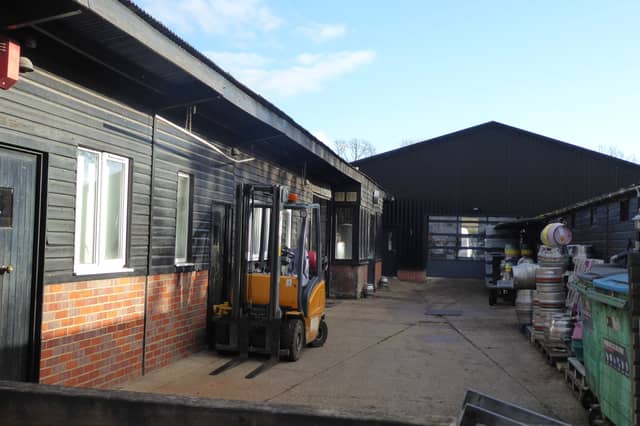

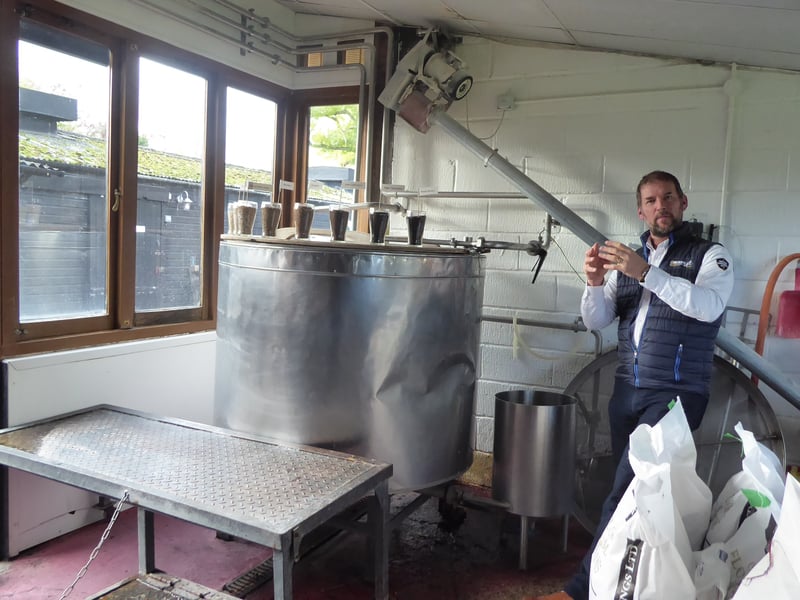
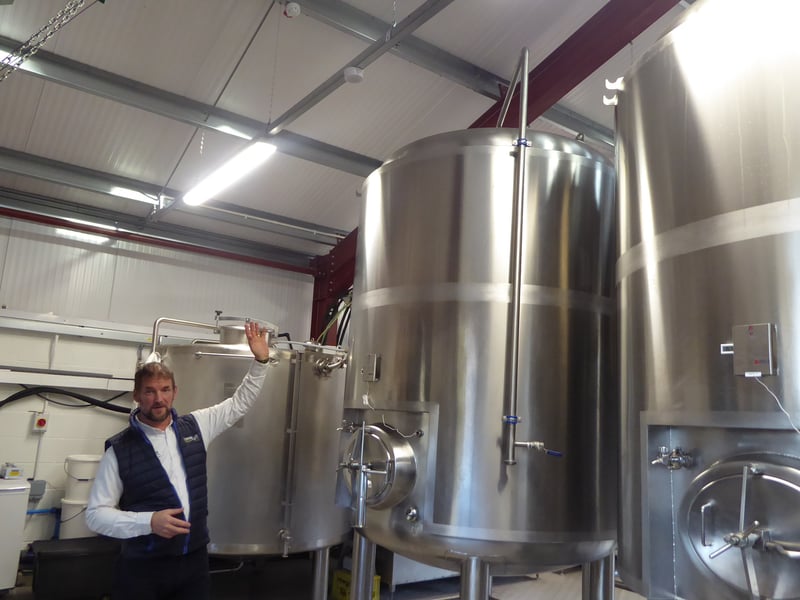
Back in 2024, Chiltern Brewery resumed their monthly tours after a lengthy gap, I was eager to check it out, even if it meant having to traverse several hours over multiple forms of public transport to get to its rural location in Terrick. I arrived at the brewery at the brewery 30 minutes and was offered a complimentary drink, which is customary on these tours. Before long, the tour commenced with the current brewery partner Tom Jenkinson acting as our guide. The brewery site was formerly a farm, and over the years the brewing facilities have expanded until it covered the whole site in 2010. They generally produce 10,000 – 12,000 pints a week, six beers at a time. Tom took us to the mash tun, he informed us that when his father Richard set up the brewery back in 1980, he sourced equipment from the milk industry and various former breweries, one vessel which he acquired from Bass was 80ft high, so he had to cut down to size to enable it to fit inside the fermenting room. Tom stated in recent years, the malt they source is grown regeneratively and locally from the nearby Waddesdon Estate, and all their beers use a Maris Otter malt base. Meanwhile, the hops are mainly sourced from the Herefordshire/ Worcestershire border, where the likes of Fuggles, Goldings and Challenger hops are primarily utilized for most of their beers; whereas other hop varieties are used for their small batch releases which they produce using their pilot kit that creates enough beer for 10 firkins per brew. After guiding us through the intricacies of the mashing and boiling process, Tom took us to the newly built warehouse which was completed three years ago, and houses a range of square fermenters and six conditioning tanks of different sizes. Apparently, during run-off at the beginning of fermentation they always overshoot the gravity of their beers a little so they can work their way down to the required ABV by flushing through excess sparge/ liquor. After a week in the fermenters the liquor is transferred to the conditioning tanks, where the yeast continues working for secondary fermentation and carbonation.
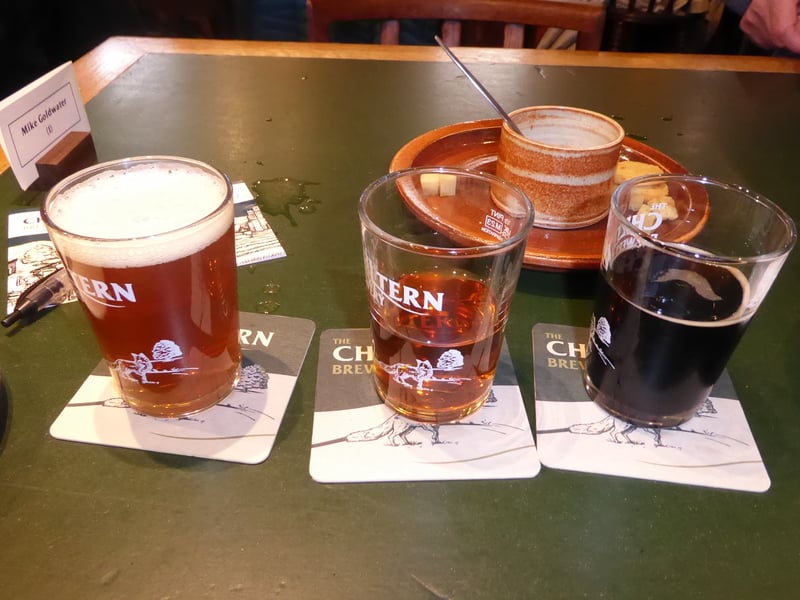
By 3pm the guided tour of the brewery was over, and we were brought to the function room for a beer and food tasting. Four beers were presented to us, along with a range of their beer infused food products, such as their two cheeses including Terrick Truckle made with their beer mustard and Beechwood Beer Cheese blended with Beechwood Bitter (4.2%); a chutney infused with their Three Hundred’s Dark Old Ale (5%) and a cake made with Bodger’s Barley Wine (8.5%). The first beer we drank was Chiltern Ale (3.7%), which ironically was their first ever release from 1980. Light and sessionable with a simple blend of Maris Otter and Goldings hops, it gives off a gentle honeyed flavour, making it an ideal aperitif for the tasting session. Next, we sampled some Beechwood Bitter (4.2%) their landmark product which debuted in 1982 and helped put the brewery on the map. It was pleasantly bitter with hints of butterscotch, nuts and fruit with a rounded malty base that helps give its distinct character. Out of all the beers I tried that session, this was the best paring with the cheeses and chutney as it had the right balance of flavour. We soon took things up a notch and tried some Dear Mr. Porter (6.3%) one of their small batch releases, an export style India porter made from four types of malt and a blend of classic and new English hops. Upon sipping, I was met with a prominent combination of roasted malt and a dry bitterness on the palate followed by a kaleidoscope of flavours including chocolate, grapes, caramel, coffee and burnt toast followed by a warming alcoholic hit that blended well with the other flavours. Tom instructed us, by adding more ingredients, this helps give it more strength and character in flavour. For our last beer we tasted some Bodger’s Barley Wine (8.5%) which debuted in 1990 to mark the brewery’s 10th anniversary. A barley wine in the classical sense, it was developed as a homage to the estate brewers of the 18th and 19th century who produced beers to a high strength, in absence of wine. Although pale in colour it was deceptively powerful in strength, viscous in mouthfeel, along with a noticeable fruity element offset by a bittersweet lacing of Fuggles and Goldings hops, this was rounded off with a warming aftertaste; it was as close to wine as you can get with a beer and it made an ideal pairing with their Bodger’s infused fruit cake. The tour overall was memorable and enjoyable, Tom was an incredibly informative and knowledgeable host, and the food and beer tasting session that followed helped give us a deeper understanding about what goes into their glorious range of beers, this tour is well worth the visit.
2. Brewery Tour
Jenkinson later guides us through the conditioning tanks. | Mike Goldwater