
New name confirmed for council set to serve Dacorum under Government reconstruction plan
The planned new north west Hertfordshire council is now set to be called West Hertfordshire Council after an intervention from the leaders of two existing authorities.
Sally Symington and Paul de Kort, the leaders of Dacorum Borough Council and St Albans City & District Council respectively, called for the Government to change the proposed name of the new unitary authority.
It is understood that the West Hertfordshire name is now set to be included in the legislation creating the new council. West Hertfordshire Council will begin as a shadow authority next year and will formally take power in April 2028 as part of the government’s shake-up of local councils.
Under the plans, Hertfordshire County Council and all existing district and borough councils will be abolished, with their powers combined into four new unitary authorities across the county.
The West Hertfordshire Council will cover the areas currently represented by Dacorum Borough Council and St Albans City & District Council.
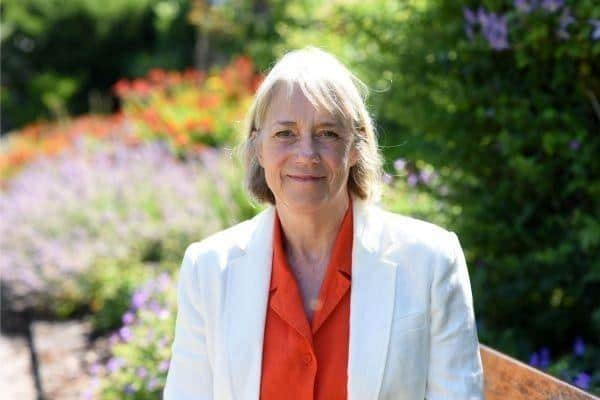
Cllr Symington said that the West Hertfordshire name had been submitted as part of representations to the Government on its Structural Changes Order, the formal process by which Hertfordshire’s existing councils will be replaced.
The order is expected to come into force in early 2027, when the name of the new authority will be confirmed. Cllr Symington told a council meeting on Wednesday, that the North West Hertfordshire name had been used in the Government’s recent decision on local government reorganisation because it was the name that had been originally submitted as part of Hertfordshire’s proposals last year.
The Dacorum council leader added that the new proposed name of West Hertfordshire would reflect that Dacorum is “not actually in north Herts at all”. “It is right that the placeholder name is West Herts and represents where we are geographically,” she said.
The name could change again in future after the unitary authority takes power in 2028. Under the Local Government Act 1972, councils can change their name if two-thirds of councillors vote to do so.
Cllr de Kort said the new name would be “appropriate” for the unitary authority as “it stretches the farthest to the west, but does not reach anywhere near as far north as Stevenage or Royston”.
But he continued: “Whilst names matter in giving people a sense of place, the name of the new council is the least of our worries, as the complexities of putting together four new authorities in just 20 months dwarfs this.”
Cllr de Kort has criticised the Government’s decision to back the four-unitary option over a two-unitary model, saying that it creates “a great risk for residents” around providing “essential services”.
Cllr Symington, meanwhile, said earlier this month that local government reorganisation is a “once-in-a-generation opportunity to redesign local government – making it simpler, more accountable, and fit for the future”.
The Ministry of Housing, Communities and Local Government was contacted for comment on this story.