
Hertfordshire County Council votes through controversial library performing arts cuts
Councillors have agreed to push ahead with plans to axe the county’s performing arts library service – but only if the collections can remain available to groups in Hertfordshire.
The county council drew up proposals to withdraw the service – which loans scripts and sheet music to performing arts organisations – in a bid to cut costs by £230,000, earlier this year.
That prompted calls from a number of organisations for the council to continue the service – amid fears that some groups would close without it. And now – following an eight-week period of public consultation – council officials have come up with revised proposals that would ensure scripts and music can continue to be made available.
As part of the latest plans, the drama sets will become part of the library service’s ‘reading group collection’, which loans multiple sets of books to book clubs. And officials are now hoping the music collection can be made available to groups and individuals through the Hertfordshire Music Service and the Hertfordshire-based charity, Benslow Music.
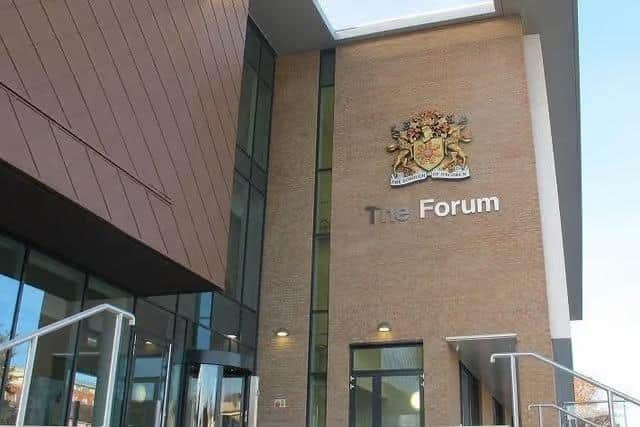

The future of the performing arts library was considered at a meeting of the county council’s cabinet yesterday. And at that meeting, councillors agreed to push ahead with plans to withdraw the service, but only subject to arrangements for access to the existing music collection being in place.
Outlining the plans, executive member for resources and performance Cllr Chris Lucas (Liberal Democrat, Hitchin South) highlighted the response to the council’s public consultation.
And he said councillors had been moved by those who had told them how important the performing arts library was to themselves, their children and their communities.
He said it was unfortunate that they were in a position where they were having to look at all county council expenditure to see how best they could deploy the county council’s resources. And he highlighted ongoing negotiations that would maintain the service for users, while making the necessary reduction in spending.
“Obviously, when we conducted the consultation, we were moved by the volume and the passion that was expressed throughout the consultation,” he said. “And as a result, we have had to think carefully about how to achieve the savings of £230,000 that we expend on the performing arts library.
“And in so doing, the officers looked creatively and innovatively at different solutions, in response to the consultation, at ways that we can try to square the circle – try to maintain the service, but without having to spend that money.”
Cllr Lucas said they were in “deep negotiations” with the Hertfordshire-based service that could take on the performing arts service, but had been unable to finalise the agreement in advance of the meeting.
And as a result – in line with a decision taken by the council’s resources and performance cabinet panel the day before – he proposed that plans to withdraw the could progress “subject to” the arrangements for access being agreed.
That was an approach that was backed by the leader of the county council, Cllr Steve Jarvis (Liberal Democrat, Royston West and Rural). “As you said, we probably all got representations about the value of the performing arts library and the way in which it supports cultural activities across Hertfordshire,” he said.
“None of us would want to see those activities come to an end. But there is clearly a need to find a way in which we can support those within the resources we have available. And it is good news that we think we have identified a way to do that.
“I think the revised recommendation makes it clear that our intention is to proceed with the body with whom we think we have an agreement.
“But should that turn out not to be the case, then we will need to rethink the future of the performing arts library.”
According to the cabinet report, the current performing arts library has a total of 3,098 titles. And in the 2025 calendar year, there were 721 orders for musical material and 342 for drama – placed by 162 music groups and 54 drama groups.
Of the 1,286 responses received as part of the council’s public consultation, 57% pointed to the higher costs their groups would face should the service be withdrawn – with some suggestions that commercial alternatives would be “prohibitively expensive”. And 39% of respondents suggested that groups – many of which were said to “operate at break-even or loss already” – would close.