
Hertfordshire consultation on major local Government shake up set to close
Residents have less than two weeks to express their views ahead of what is expected to be the biggest shake-up of local government in Hertfordshire in a generation.
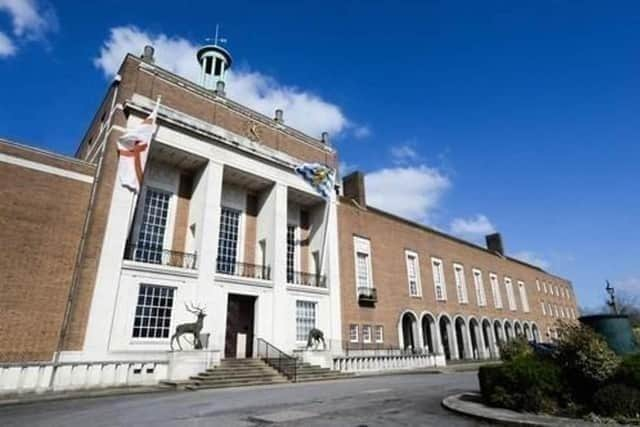
Local government in Hertfordshire currently operates on a two-tier system – with a county council and 10 district or borough councils. The county council is responsible for services that include education, social care, highways, public health, trading standards, libraries and waste disposal.
And the district and boroughs provide services that include housing, parking, waste collection, licensing and town planning. But in 2028, the 11 existing councils are expected to be replaced with a smaller number of unitary authorities, with each of those unitary councils responsible for all local government services in their area.
Proposals under consideration have suggested splitting the county into two, three or four unitary authorities. Last month, the Government launched a seven-week public consultation on the options, as part of its own decision-making process.
With the consultation set to close on March 26, residents and other interested parties now have less than two weeks to respond. In a statement issued to the Local Democracy Reporting Service, council leaders from across the county are encouraging residents to have their say.
“Given the importance of this consultation and the potential long-term implications for the way services are delivered across the county, we want to ensure residents are fully aware of the opportunity to make their views known,” says the statement issued on behalf of the 11 council leaders.
“We strongly encourage everyone to respond to this consultation before the closing date on March 26.”
As part of the consultation, respondents are asked to answer between eight and 10 questions for each option. The majority of the questions have drop-down options and ask respondents to quantify their strength of support or disagreement, with a further question allowing for further explanation or comment.
The questions ask respondents to what extent they agree or disagree with each of the three proposals, based on a “sensible” geography and economic area, and whether they will be able to deliver the outcomes they describe.
They seek views on whether the proposed councils are the right size “to be efficient, improve capacity and withstand financial shocks” and the extent to which they agree that each proposed council could “deliver high quality, sustainable public services”.
They ask to what extent respondents agree or disagree that each proposal has been informed by local views and will meet local needs, and will support devolution arrangements. And they seek views on whether each proposal enables stronger community engagement and gives the opportunity for neighbourhood empowerment.
The proposals to split the county into unitary areas are broadly based around existing district and borough boundaries, with a small number of boundary changes. The consultation gives respondents the opportunity to answer the questions for each of the three unitary options – that would split the county into two, three or four authorities.
The two unitary authority option would split the county into west and east, with the west including those areas currently covered by Dacorum, Hertsmere, St Albans, Three Rivers and Watford councils and the east including Broxbourne, East Herts, North Herts, Stevenage and Welwyn Hatfield.
Under the three-unitary council proposal, the county would be split into east, west and central unitaries. The eastern unitary would include areas currently covered by Broxbourne, East Herts, North Herts and Stevenage councils.
The west would include Dacorum, Three Rivers and Watford areas, as well as Bushey North and Bushey South. Meanwhile, central would include Hertsmere, St Albans and Welwyn Hatfield, without the Bushey North and Bushey South county council electoral divisions.
The final option under consideration would split the county into four; west, south-west, central and eastern. Areas currently covered by Dacorum and St Albans would form the west unitary, while Hertsmere, Three Rivers and Watford would form the south-west.
The bulk of North Herts and Welwyn Hatfield would join with Stevenage to form the central unitary. But the existing North Herts district wards of Royston Heath, Royston Palace, Royston Meridian, Ermine, Weston and Sandon and Arbury and the Welwyn Hatfield ward of Northaw and Cuffley would join with Broxbourne and East Herts areas to form the eastern unitary.
More information about the proposals – and the Government’s consultation – can be found at www.hertfordshire-lgr.co.uk