
Hertfordshire below national average for deaths by suicide as council releases new strategy
Ongoing work to prevent suicides in Hertfordshire has been highlighted at a meeting of county councillors.
The Hertfordshire Suicide Prevention Strategy 2025-30 provides a detailed insight into the prevalence and nature of suicide in the county.
It outlines measures that have already made a difference in the reduction of suicide and highlights the county’s organisations and services that are working together, as well as areas of focus for the future.
And it was presented to a meeting of the county’s public health and community protection cabinet panel on Thursday.
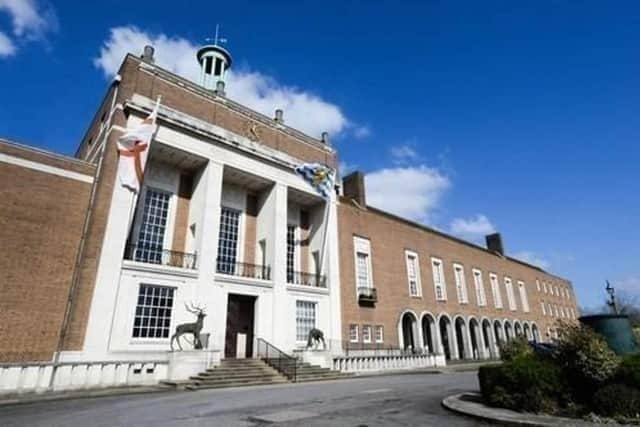

According to data included in the strategy, residents in Hertfordshire are less likely to take their own lives than those in other parts of the country.
Nevertheless, in the preface to the document director of public health Sarah Perman stresses the impact that each death by suicide can have.
“Every death of an individual by suicide is a tragedy,” she says.
“When someone takes their own life, the tragedy has a ripple effect, causing loss and distress to family, friends, colleagues, and those who may have witnessed the suicide.
“We need to do everything we can to prevent these desperate situations where people feel that their only choice is to take their own lives.”
The strategy has been developed following engagement with professional organisations and those who have had first-hand experience.
And as well as that, data has been analysed to identify five areas of focus for the refreshed strategy.
Those areas are suicide attempts; children and young people; groups requiring focused support; addressing common risk factors for suicide; and individuals bereaved by suicide.
And the strategy – which also outlines ‘priorities’ for each area – will be followed by the development of an action plan.
Presenting the strategy to county councillors, associate director and consultant in public health, Aideen Dunne said they believed that suicide was “everybody’s business”.
She said this was reflected by the strong partnership in Hertfordshire – pointing to a number of groups, services and organisations involved.
And she outlined how the strategy included complementary approaches that focused on the individual and population.
“In Hertfordshire, we have a really strong partnership and an established partnership around tackling mental health and suicide,” she said.
“And all of the partners here we engaged with in developing this strategy.
“We do believe that suicide is everyone’s business. And that is reflected by the strong partnership in Hertfordshire.”
According to the data within the report, between 2021 and 2023, the coroner recorded 230 deaths by suicide in the county, of which 91% involved Hertfordshire residents.
At the meeting, councillors heard the county’s rate of death by suicide in 2023 was reported to be 8.1 deaths per 100,000 – compared to a national average of 10.7 deaths per 100,000.
And they heard of variations between Hertfordshire’s boroughs – with higher rates of death by suicide in St Albans, Three Rivers and Hertsmere and lower in Watford and Dacorum.
Highlighting the “scale” of the issue in Hertfordshire, Ms Dunne acknowledged that Hertfordshire compared favourably to the East of England and nationally, having remained below national rates for suicide for the past 10 years.
But she also pointed to the differing rates within the county – and the need to reduce the number of deaths by suicide further.
“We do recognise that within Hertfordshire there are areas that have higher rates,” she said.
“But we also come from a position where one death is one death too many.
“So whilst we are below national, we don’t sit on our laurels. We want to get those numbers down.”
Overall, the data presented to councillors suggests that between 2021 and 2023, men accounted for 75% of deaths by suicide in the county.
And 40.9% of those who died were between 40 and 59 years old.
According to the strategy document, almost three-quarters of those who died had a mental health diagnosis recorded by their GP.
And almost a fifth had discussed their mental health with their GP in the four weeks before their death.
Other risk factors highlighted in the strategy were said to include relationship problems (46.1%), physical health (38.7%), drug and alcohol problems (32.6%) and bereavement (23%).
More than one in three of those who died had made a previous suicide attempt.
In Hertfordshire, data is also collected on suicide attempts. And councillors heard that between 2022 and 2024, 1,140 attempts were recorded. Of those 56% were made by women and 44% by men
The Hertfordshire Suicide Prevention Strategy 2025-30 was presented to a meeting of the council’s public health and community protection cabinet panel on Thursday.