
Five proposals put forward for new council systems in Hertfordshire
County councillors have backed a submission to government outlining five proposals for the reform of local government in Hertfordshire.
As part of the proposals – drawn-up in response to an invitation by government – the existing county, district and borough councils in Hertfordshire would be abolished.
And they would be replaced by one, two, three or four ‘unitary’ councils.
The submission – drafted on behalf of Hertfordshire’s 11 councils – is due to be submitted to government by the end of the week.
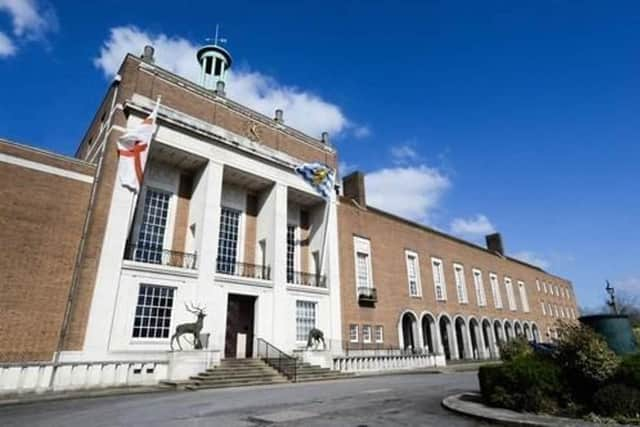
And on Monday the latest draft was backed by a meeting of the county council’s cabinet.
At the meeting leader of the county council Councillor Richard Roberts described the document as a “stepping stone” – that would put the county in the right place to have meaningful conversations in the months to come.
He said that the submission – prepared at “breakneck speed” – was “broad and inclusive” and thoughtfully put together, so that further proposals could be worked-up by November.
But he said that some options in the document had “probably got more credibility than others”.
Within the 26-page submission, the county council has prepared the proposal for a single unitary authority covering the whole county.
This option does not have the backing of the majority of district and borough councils.
But according to the part of the submission prepared by the county council, the scale of a single unitary authority would provide the opportunity to strengthen ‘place-shaping’ across the county.
It would, it suggests, streamline the number of public sector partners operating in the county, as well as reducing duplication and stream-lining service delivery.
And it would reduce the risk associated with the breaking-up county-wide services such as social care and children’s services.
During the meeting of the cabinet, the risks of breaking-up these services between multiple unitary councils were highlighted a number of times.
And Cllr Roberts said that this would be “one of the really big challenges of proposals coming forward”.
But members also highlighted concerns relating to the costs of reorganisation, the time-frame and the impact on residents.
Executive member for adult care, health and wellbeing Councillor Tony Kingsbury suggested reorganisation was “being mandated at a potentially excessive pace for such significant changes in two-tier local government”.
And Councillor Caroline Clapper, executive member for education, libraries and lifelong learning, said the “reckless” time scales “could have a significant consequence on the quality of service that we’re providing”.
She pointed to the impact of “splitting-up” services and to the “potentially eye watering” costs associated with any potential changes.
And she stressed the need to make sure any changes were as “undisruptive as possible” for residents.
“I think we need to go into what is being forced upon us with our eyes wide open – and make sure that, whatever happens, we try to keep it as smooth and as undisruptive as possible for the residents we represent,” she said.
Executive member for sustainable economic growth Councillor Stephen Boulton also put the focus on residents.
And he said it was the quality of services – and not financial savings – that should be the first consideration.
“This administration and those before have set a high standard of quality of service in Hertfordshire,” he said.
“That quality must be maintained in any new arrangement for the people of Hertfordshire.
“And it’s the people of Hertfordshire who must benefit from the government’s intended rearrangement of the county and the boroughs – not the Treasury, if you like, and certainly not any political change that this may bring about for this government.
“The measure will be, in my mind, whether the people of Hertfordshire benefit – and whether Hertfordshire becomes a better place in the future.”
Executive member for children, young people and families Councillor Fiona Thomson also expressed concern about the “pace” and the “timeline”, as well as the impact and cost of having to “split up” children’s services.
And executive member for highways and transport Councillor Phil Bibby also pointed to the cost of reorganisation.
He particularly highlighted the additional costs of renegotiating contracts, such as highways – should there be multiple unitary councils operating in the area previously covered by the county council.
And making the case for a single rather than multiple unitaries, he said: “We could save a lot of money with one unitary, but […] more unitaries would cost us money at the end of the day.
“And residents, I’m sure, will not thank us for actually wasting their money, which could be invested in better services for them.”
Executive member for community safety and public health Councillor Morris Bright suggested that the proposal to replace the existing system with four unitary councils was “a joke”.
And he suggested the county council wanted to make sure that their arguments for the way forward were going to be the ones that were listened to.
Concluding the debate Councillor Roberts said that they would now want to engage with residents and businesses “at the earliest opportunity”.
He said that breaking-up a council that services 1.2 million people, provides 500 services and has a budget of £1.2billion was not for the faint-hearted.
And he said: “[...] two, three or four councils will cost more money than just having one. It is as simple as that.
“And the last time I checked the country hadn’t got any spare cash. So let’s just bear all that in mind as we go forward.
“We do what’s right for residents, what’s right for service delivery and what is the right outcome for the long-term future of Hertfordshire.
“This is a 50 to 100-year project and we need to get it right now.”
In the next stage of the process, government officials will provide feedback on the councils’ submission or ‘interim’ plan.
And any full proposal is due for submission to government in November.
According to the report considered by the county council’s cabinet, the government’s expectation is that new unitary authorities would be delivered by April 2028.