
Dacorum Borough Council leader reveals her preference for Hertfordshire's government reorganisation
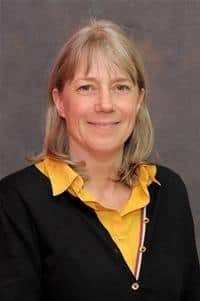
The leader of Dacorum Borough Council’s minority Liberal Democrat administration, Cllr Sally Symington, has backed plans for Hertfordshire to be split into two unitary authorities – but the council as a whole wants the county to be divided into four new authorities.
A final decision on which option is formally supported by Dacorum Borough Council will be taken at a cabinet meeting on Tuesday with Cllr Symington stating that the Liberal Democrat cabinet “will be fully cognisant of the will of this chamber”.
The Government-led local government reorganisation is set to see Hertfordshire County Council and the 10 district and borough councils abolished, with unitary authorities created instead.
The new authorities will take over all local government responsibilities in the areas they cover. It means that services previously divided between the county council and district council will be placed under the control of a single authority.
In Hertfordshire, a 410-page joint submission from all 11 councils will be put forward to the Government later this month, with each council supporting one of three options – for the county to be divided into two, three or four unitary authorities.
At a meeting yesterday, borough councillors in Dacorum debated which option to back, with 26 supporting the four-unitary model against 16 for the two-unitary model. No councillors voted for the three-unitary model.
Cllr Symington, who said she had given her Liberal Democrat group a free vote on the issue, voted in favour of the two-unitary option, while Cllrs Andrew Williams and Angela Mitchell, the leaders of the Conservative and Labour groups respectively, spoke in support of the four-unitary model.
A final decision on the reorganisation of local government in Hertfordshire will be taken by the Government in the summer of next year.
The two-unitary model would see Dacorum joined with Hertsmere, St Albans, Three Rivers and Watford in a West Hertfordshire authority, while the four-unitary model would pair Dacorum with St Albans in a North West Hertfordshire authority.
The former option would cover a population of around 625,000 and have 117 councillors, while the latter would have around 312,000 residents and 79 councillors.
The Government has said a population size of 500,000 or more is a “guiding principle” of local government reorganisation, but is “not a target”.
Financial modelling suggests the two-unitary option would make the highest cost savings over the first 10 years when compared with the current system of local government, of between £366m and £418m, compared to £124m for the four-unitary option.
Cllr Symington said the two-unitary model would bring “the greatest financial savings and the greatest financial resilience” and would “break up the huge social services for adults and children in the least disruptive way”.
She continued: “It’s incredibly important in a cost-of-living crisis that we do not dismiss … the financial impact, longer-term, on our residents of having higher council taxes than are strictly necessary.
“It isn’t just about that, it’s about being able to deliver those services across a wider area.
“This process has been forced upon us.
“It isn’t what we would choose to be doing, but we are required to bring forward a single option for this council.
“We can only hope, and strive to make possible, that it delivers better services for our residents in the long term.”
The council leader added that the new authority covering Dacorum should be based in Hemel Hempstead, while deputy leader, Cllr Simy Dhyani, also spoke in favour of the two-unitary model.
Cllr Williams echoed Cllr Symington’s concerns that local government reorganisation was happening at all.
He said the process was being carried out “to fix something in Hertfordshire that certainly isn’t broken in the first place”.
Cllr Williams continued: “There’s an awful lot of money to be wasted and time to be spent on something that we needn’t be doing.”
Speaking in favour of the four-unitary model, he said: “Let’s look at what’s best for the residents of Dacorum, what gives the best democratic accountability.
“We should not make a decision based purely on ticking a number of boxes that the Government feels we should tick. We should make a decision based on what we think is best for our residents.”
The Labour group leader, Cllr Angela Mitchell, said her group backed the introduction of unitary authorities and added: “This will make it easier for residents to access services as well as achieve significant cost savings by eliminating duplication.”
Explaining the Labour group’s decision to support the four-unitary option, Cllr Mitchell continued: “Although a two-unitary model would potentially benefit from economies of scale … financials are just one of the six criteria set by the Government, and it should not be given excessive weight.
“The Labour group feels strongly that democracy must remain as localised as possible and that the voices of people living in Dacorum should not be diluted and lost in a massive local government area.”
The four-unitary model was also supported by independent Cllr Jan Maddern, who described it as the “least bad option”.
A Government consultation on the proposals for local government reorganisation in Hertfordshire is expected in spring next year, before a final decision is made in the summer.
The provisional timeline sets out that elections to the new unitary authorities would be carried out in May 2027 before taking over from the current councils in 2028.