
Councillors in Hertfordshire back plans to upgrade streetlights
Hertfordshire County Council is planning to allow councillors to fund additional streetlights or upgrade existing ones in their own areas.
Each of the 78 county councillors is allocated an annual highways locality budget (HLB) of £95,000 to fund road resurfacing, pothole and pavement repairs, drainage clearance, traffic calming, sign cleaning, line painting and hedge trimming. Councillors consult with residents as well as district, town and parish councils to prioritise improvements.
Under the terms of the HLB, councillors can already fund provision of lighting on remote footpaths; this has been done in 22 locations. Now, council officers have drawn up plans to extend that further.
As a result, councillors could be allowed to fund additional lighting in locations that include unlit ‘active travel routes’, such as cycleways and footpaths, and they could be able to upgrade existing streetlighting “to current standards”.
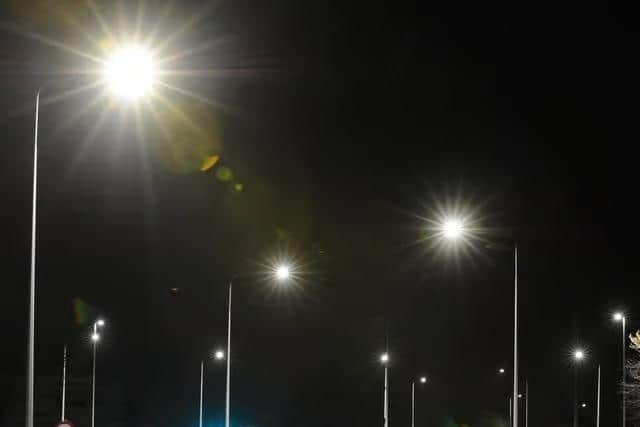

The proposal was backed by a meeting of the council’s highways cabinet panel on Thursday (October 8) and will be considered by the council’s cabinet on Wednesday.
According to a report, councillors would have to allocate between £9,400 and £9,800 per lighting column, depending on the number of hours it would be lit. This would cover installation, maintenance and energy costs, as well as removal at the end of a 25-year life.
But there would be a cap on the number of streetlights that could be funded in this way.
The report notes a 1% increase would equate to an additional 1,165 streetlights – around 15 per council division.
The collective cost of that number of streetlights would be £11.417 million if lit all night. This would reduce to £10.95m should the lights be switched off for four hours at night.
This number of extra streetlights would increase energy consumption and associated carbon emissions by nine tonnes a year if all were ‘full night lit’ or 4.6 tonnes if ‘part-night lit’.
The county council has operated a part-night lighting policy since 2012-13. Around 75,800 streetlights – that’s two out of three – are dimmed in stages from 9pm and switched off between 1am and 5am, before being switched back on at dawn.
Meanwhile 40,700 streetlights – usually on major roads or junctions, roundabouts, pedestrian crossings, transport hubs or town centres – remain on all night, with some being dimmed overnight.
According to the report, monitoring of part-night lighting has identified no increase in injury collisions for drivers, pedestrians or cyclists, no adverse impacts on crime and that “significant environmental and financial benefits have been realised”.
The report says: “The review concludes that the current street-lighting policy remains fit for purpose. Overall [it] achieves a balanced approach that supports highway safety while managing light pollution, carbon emissions and affordability for Hertfordshire taxpayers.”
The combined impact of a move towards part-night lighting and LED/CMS technology has reduced street-lighting carbon emissions by around 80% – saving the council £6.7m a year in electricity costs.