
Controversial Hertfordshire meeting to be scrutinised after mass walkout
Hertfordshire county councillors are to formally discuss events that led to Conservative members walking out of a meeting, before a crucial vote on local government reorganisation.
The extraordinary meeting of the county council, on November 19, had been called so councillors could consider proposals to replace Hertfordshire’s existing two-tier structure with two, three or four unitary councils.
And at the end of a two-hour debate, a vote was held to determine which of the three options had the most support.
But minutes before that vote, Conservative councillors walked out of the council chamber, in protest.
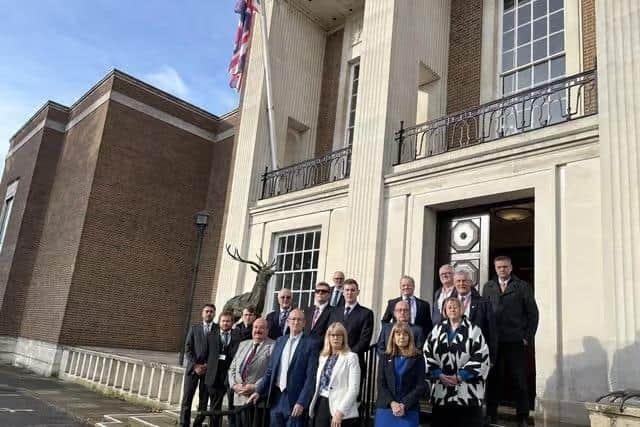

They did so, they said, because they had been asked to express a preference for one of the three options or to abstain, without an option to formally vote against the proposals.
And now Conservative Cllr Alexander Curtis – backed by Reform Cllr Caroline Clapper and fellow Conservative Christopher Alley – has secured an extraordinary meeting of the council’s overview and scrutiny committee to examine the “controversies” of the council meeting, “especially around the voting”.
Cllr Curtis says his concerns focus on the lack of an option to vote against the motion at the meeting.
And he says he hopes a consensus can be found to prevent a repeat of the events at the meeting of the full council.
“The lack of ability for councillors to vote against a motion tabled at a council meeting sets a concerning precedent,” Cllr Curtis told the Local Democracy Reporting Service.
“Many county councillors, including local Conservatives, oppose Keir Starmer’s misguided plans for local government reorganisation, which would leave Hertfordshire taxpayers paying more and receiving less for it.
“We therefore seek to understand why we were not allowed to vote against the motion tabled by Cllr Jarvis at the recent council meeting, so that lessons can be learned from this episode.
“The overview and scrutiny committee provides the ideal setting for doing this on a cross-party basis, hence why the special meeting has been called.
“I hope that consensus can be found on a positive way forward here that prevents a repeat of the events we witnessed the other week.”
The county council has not commented in advance of the meeting of the overview and scrutiny committee.
But following the council meeting now under scrutiny, they stressed that the vote had been “unlike other votes”, in that it was “indicative” and “non-binding”.
They also said that members had been able to express their views verbally, which were then included in the minutes.
The results of the full council’s indicative vote were considered by a meeting of the council’s cabinet the following day.
And it was at that meeting that a decision was taken that the county council would express a preference for a two-unitary option, in a document that has since been submitted to the Government.