
Gritters attend 'melting' roads in Hertfordshire during extreme weather
We may be more used to seeing gritters in the winter months, but in recent weeks, county council officials have been using them to make Hertfordshire’s roads safer in hot weather too.
That is because in some places the extreme heat has been enough to soften the asphalt road surfaces. And grit is being used to make sure the roads remain safe for motorists.
On Monday, members of the county council’s highways cabinet panel heard that two gritters had been on standby during the recent spell of hot weather.
And during that time, they had been called out 20 times to add grit to melting road surfaces. Explaining the process, Chris Allen-Smith told councillors that asphalt road surfaces contain bitumen, which could soften and melt in these extreme temperatures.
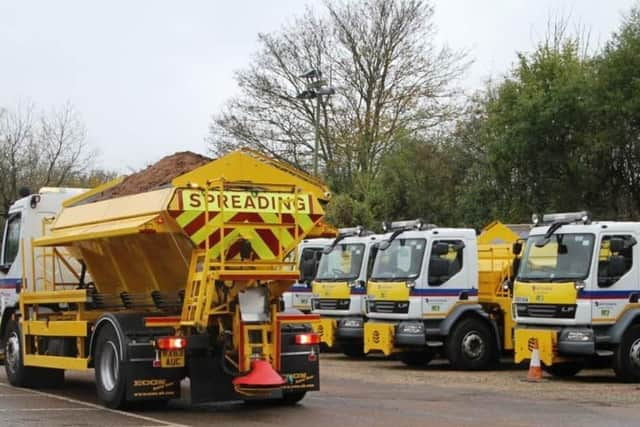

And the bitumen, he said, then leaches up to the surface of the road, which can make it temporarily “a little bit more slippery”.
“So what we do is we go out and spread something appropriate, usually either granite dust or grit, depending on what is available, ” he told the councillors. We spread that over the surface, and that helps to absorb the excess bitumen and gives some grip until the road cools down and settles down and returns to normal.
“And usually that’s all we need to do. It’s usually just a temporary measure, and the issue passes once the temperatures return to a more normal range.”
Cllr Ken Crofton (Conservative, Hertford Rural) compared temperatures in Hertfordshire with the rest of Europe, asking whether the composition of road surfacing should be altered.
“We all know we are experiencing hotter and hotter temperatures in this country, and particularly in the south of England,” he said. “But it is not an unusual temperature for most of Europe and the rest of the world.
“So the question is, we have all experienced the melting, but isn’t it time that we actually looked at increasing the melt specification of the Tarmac we are using?
“Because we can’t keep on having melting situations that are completely unique to this country and nowhere else in Europe and the hotter climates.”
In response, Mr Allen-Smith said the situation was “not unique to the UK situation” and that they were “always looking at asphalt specifications”.
But he suggested that adding binders that would make the surface stiffer in the summer would then crack more easily in winter. And similarly, binders that would make the surface more flexible to prevent winter cracking would be more likely to melt in summer.
He said: “We can tweak that binder. We can make it a bit more flexible. And that means it will cope better with low temperatures. Or we can make it a bit stiffer, and that means it will cope better with high temperatures.
“But if we go in one direction, we are compromising the other. If I specify stiffer binders for all of our asphalt, then they will be more likely to crack in the winter. And if I specify more flexible binders, then they will be more likely to melt in the summer.”
Mr Allen-Smith said additives could be used to increase the ‘working range’, but that these would add to the cost “quite significantly”.
He suggested that the amount of melting was relatively small – with just two gritters having been on standby. And he said it was a case of “trying to keep any measures that we do proportionate to the scale of the problem”.
“It is not a huge issue,” he said. “It is an issue we would rather it wasn’t there. But it is something we know we can cope with.”
The information on the measures being taken to ensure melting roads were kept safe was delivered as part of an ‘update on pothole repairs and weather conditions’ on the highway network.