
Fire service response times fall in Hertfordshire with fewer crews meeting targets
Fewer fire crews in Hertfordshire have been meeting targets to reach property fires within 10 and 13 minutes, according to newly released performance data for 2024/25.
Hertfordshire Fire and Rescue Service say that a fire engine should arrive at the scene of a property fire within 10 minutes, in 90% of cases.
And where a second engine is required, they say that, in 90% of cases, it should be on the scene within 13 minutes.
But according to the annual performance report, in 2024/25, the targets were met on just 83% of occasions.
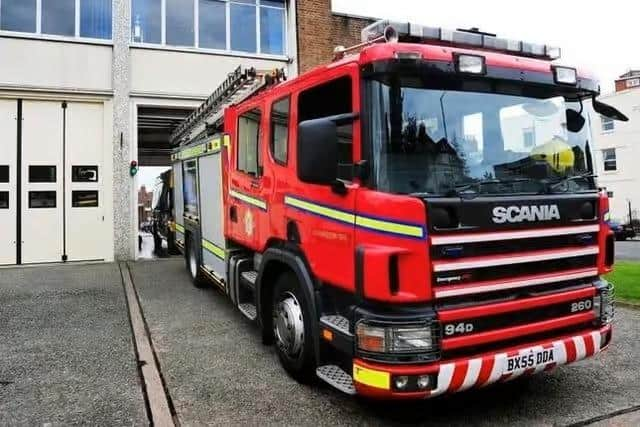

And that’s lower than the previous year (2023/24) when the 10-minute target was met in 89.6% of cases and the 13-minute target in 85%.
Traffic congestion, lack of available ‘on call’ fire-lighters and demands from other incidents are said to have impacted response times.
However, the report also stresses that overall the average attendance times were 7.07minutes for a first engine and 9.47minutes for the second.
“There were 65 occasions in 2024-25 when the fire engine failed to meet the target attendance time,” says the report.
“This compares to 41 occasions the previous year.
“Similarly, for the second fire engine, there were 55 occasions where the target was missed, compared with 47 the previous year.
“It should be noted that this failure could be only a matter of seconds rather than minutes, but this is still recorded as a missed target.
“Also of note is the fact that in 2024-25 the average time for the attendance of the first fire engine was just over seven minutes (7.07 minutes) and for the second pump the average attendance time was 9.47 minutes.”
At the meeting, it was reported that in more rural locations, station locations meant “meeting response-time targets can be challenging and, in some instances, impossible to achieve”.
And according to the report, the fire service “continues to closely monitor the situation” – and it says it is committed to improving ‘on-call’ provision, in order to increase appliance availability.
With regard to other fire service targets, the first fire engines attended road traffic collisions within the 12-minute target on 83% of occasions – 8% higher than the 75%.
And crews reached all hazardous materials (HAZMAT) incidents within 20 minutes, reaching 100%.
According to the report, the service dealt with 1,073 ‘primary’ fires in 2024/5 – which is 30 more than in 2023/4.
Primary fires are those that occur in a building, vehicle or outdoor structure, involve a casualty or require five or more appliances.
They also dealt with 917 ‘secondary’ fires, which include incidents involving items such as refuse, grassland, drains, roadside furniture or BBQs.
That’s a “small increase” on the 879 secondary fires recorded in 2023/4, according to the report.
According to the report, there were three fire-related fatalities in 2024/5, and a further 47 non-fatal fire-related casualties. That’s one fewer death than in 2023/4, and six fewer casualties.
“The service remains committed to eliminating instances of death and casualties caused by fire in our communities,” says the report.
“To that end, we will continue to use all available data and information to identify critical risk factors such as mental health issues, limited mobility, drug and alcohol abuse and social isolation to inform how we can focus resources and target our support and interventions for our most vulnerable residents.”
In addition, crews were also called out to 576 traffic collisions during the 12-month period.
- Hertfordshire Fire and Rescue Service receives funding equivalent to £38.71 per head of population, according to data published in the 2024/25 annual report.
And that’s lower than the ‘national average’ of £52.38 per head of population.
The cost data was compiled by the Chartered Institute for Public Finance and Accountancy (CIPFA), based on responses from 40 of the 49 fire and rescue services in England.
And it is reproduced in Hertfordshire Fire and Rescue’s annual report.
“The Chartered Institute for Public Finance and Accountancy (CIPFA) publishes annual fire statistics which enable national cost comparative analysis,” says the report.
“The latest available CIPFA statistics show HFRS to be a low-cost English fire and rescue service (FRS) at £38.71 per head of the population, compared to the national average of £52.38 per head of population.
“This means that HFRS remains in the bottom quartile for spend per head of population – of those 40 (out of 49) fire and rescue services who submitted data to CIPFA for this period.”