
New plaque unveiled at Tring museum celebrating pioneering female scientist
A new plaque has been unveiled at a museum in Tring celebrating a trailblazing scientist.
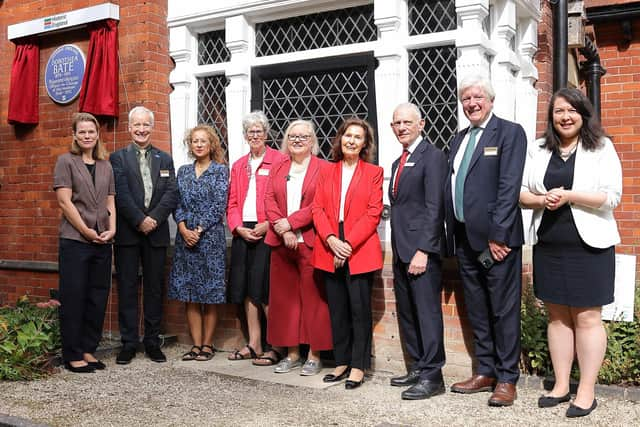
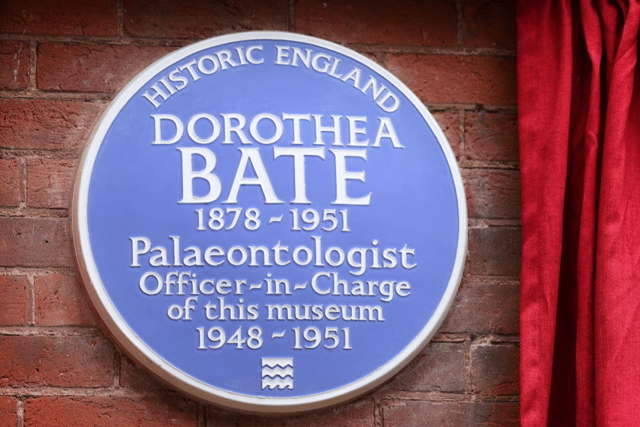
Today a blue plaque was unveiled at the Natural History Museum in Tring to celebrate Dorothea Bate.
She was one of the first women to be employed by the Natural History Museum. Historic England has described the paleontologist as one of the nation’s leading fossil hunters.
When working at the museum she was known for discovering extinct species across the Mediterranean and helping to establish the foundations of modern archaeozoology, the public body revealed.
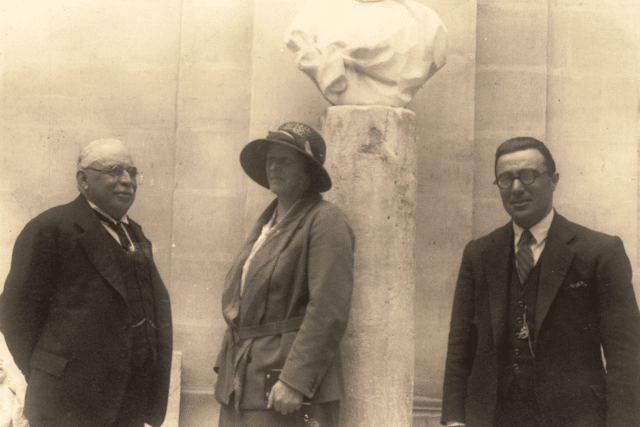

Her discoveries reshaped our understanding of prehistoric animals and the relationship between ancient environments, animals, and people, Historic England says.
She worked in the museum in her later years in life joining the institution in 1948 before passing away in 1951. Historic England revealed that she started her scientific journey at the Natural History Museum in London, in 1900.
Dorothea first worked as an assistant at the museum and released a maiden scientific paper in 1901. “Bate went on to undertake expeditions across the Mediterranean, often travelling alone to remote caves in search of evidence of ancient life,” Historic England revealed.
"In Cyprus, she discovered a previously unknown species of dwarf elephant, and in 1909, while in the Balearics, she discovered the Myotragus, an extinct goat-like antelope.”
According to the biograph compiled by the museum, she would travel through rough and inhospitable terrain, often wading through mud
and water with her basic toolkit of hammer, nets and boxes, to reach remote caves where she collected fossils and bones.
Later in her career, Bate worked alongside archaeologists, examining animal bones recovered from ancient cave sites, Historic England adds. By studying changes in animal populations over thousands of years, she helped reveal how shifts in climate affected both wildlife and early human communities. This approach helped create what is now known as archaeozoology, it has been revealed.
Her role in Tring involved the management and display of the museum’s collections. She held the title of officer-in-charge, Historic England says that despite suffering from poor health, she continued to support archaeologists and scientists around the world.
Among her historic achievements were publishing more than 80 scientific papers.
Claudia Kenyatta and Emma Squire, co-CEOs Historic England, said: “Dorothea Bate’s life was defined by her intense curiosity and desire to understand the natural world. She used this drive to make sense of ancient life through fragments of bone, bringing it to life once again. Her research transformed our understanding of prehistoric animals and ancient environments.
“Not only does her work continue to be invaluable in the field that she helped to establish, but as one of the first women to be employed by the Natural History Museum she was instrumental in paving the way for future women in science. This plaque ensures that her pioneering contributions to science receives the wider recognition it deserves.”
A number of historians and officials paid tribute to Dorothea ahead of the unveiling. They paid tribute to both her international reputation and ability to break down barriers within the world of science.