
Hertfordshire County Council issues advice after meningitis outbreak in Kent leads to two deaths
Hertfordshire County Council has issued advice to families following the meningitis outbreak in Kent which led to two deaths.
A cluster of meningitis cases have been linked to a nightclub in Kent and cases have also been confirmed at Canterbury Christ Church University and the University of Kent.
Two people died within Kent as a result of the outbreak, which the UK Health Security Agency says has now been contained.
"Meningococcal disease (meningitis and septicaemia) is an uncommon but serious disease caused by meningococcal bacteria,” a spokesperson for Hertfordshire County Council said. "The onset of illness is often sudden and early diagnosis and treatment with antibiotics are vital.”
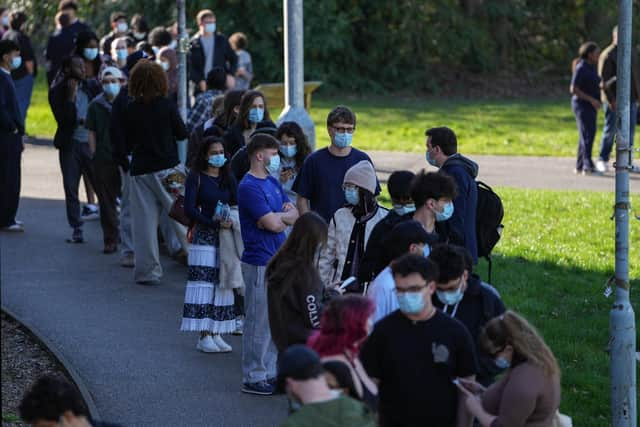

They added that the outbreaks are rare but can occur when groups of people mix together.
Hertfordshire’s Public Health Board advises that there are numerous strains of the meningococcal infection. “The MenACWY vaccination gives good protection against four of these (A,C,W&Y). It is routinely offered to teenagers in school Years 9 and 10,” the spokesperson added. “However, this vaccine does not protect against all forms of meningitis. Other strains such as MenB can circulate in young adults, which is why it’s important to know how to spot the symptoms of meningitis and septicaemia as early detection and treatment can save lives.”
Hertfordshire Public Health is urging all residents, but particularly young people, to check their vaccinations are up to date. This can be done via the NHS app or in your child’s red book. You can speak to your GP if you're not sure whether you or your child's vaccinations are up to date, the health body advises.
The body has highlighted the following early symptoms associated with the disease:
-A rash that doesn’t fade when pressed with a glass
-Sudden onset of high fever
-Severe and worsening headache
-Stiff neck
-Vomiting and diarrhoea
-Joint and muscle pain
-Dislike of bright lights
-Very cold hands and feet
-Seizures
-Confusion/delirium
-Extreme sleepiness/difficulty waking
Further symptom information can be found on the NHS website here.
The body also released the following guidance:
-If you think you or someone you look after could have meningitis or sepsis call 999 for an ambulance or go to your nearest A&E immediately.
-Trust your instincts and do not wait for all the symptoms to appear or until a rash develops. Someone with meningitis or sepsis can get a lot worse very quickly.
-Call NHS 111 for advice if you're not sure if it's anything serious or you think you may have been exposed to someone with meningitis.
-If you've had medical advice and are still worried or any symptoms, get worse, get medical help again.
Children receive relevant vaccinations under the NHS schedule which can be viewed here.
Hertfordshire Public Health advises that these vaccinations offer some protection against certain causes of meningitis, including:
-MenB vaccine – offered to babies aged 8 weeks, followed by a second dose at 12 weeks and a booster at 1 year
-6-in-1 vaccine – offered to children at 8 weeks, 12 weeks, 16 weeks and 18 months
-pneumococcal vaccine – 2 doses offered to babies at 16 weeks and 1 year, and a single dose offered to adults aged 65 or over
-MMRV vaccine – offered to children at 12 months and 18 months
-MenACWY vaccine – offered to teenagers, sixth formers and "fresher" students going to university for the first time