
Hemel Hempstead teacher with rare dementia gene to run London Marathon in memory of dad
A teacher from Hemel Hempstead is running this year’s London marathon raising awareness around a rare dementia disease which has devastated her family.
Sarah Dolling, who is 43 and lives in Hemel Hempstead, lost her father, aunt and grandmother prematurely to a rare inherited form of dementia called familial Frontotemporal dementia (FTD) that causes personality, behaviour, and language changes, a charity revealed.
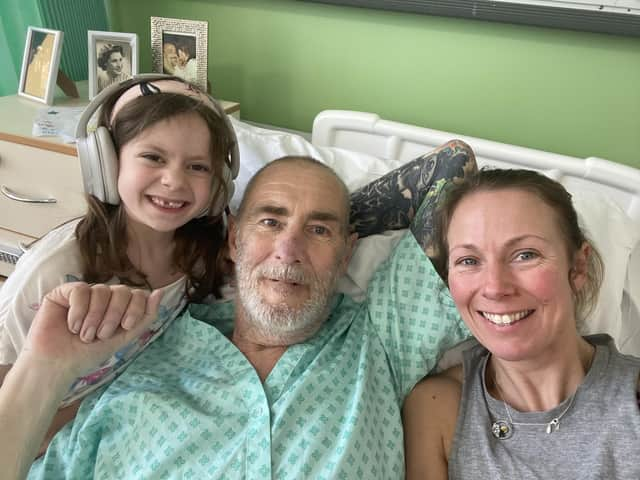
Currently, the University of London College NHS Trust adds that Sarah’s uncle also has the condition and is in a care home. Sarah also has the gene.
She is running the London Marathon on Sunday to raise money for The National Brain Appeal, and honour the memory of her dad, Mel.
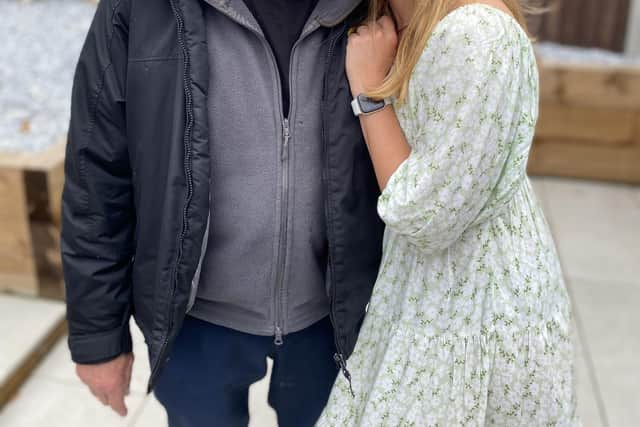
The National Brain Appeal is the dedicated charity for the National Hospital for Neurology and Neurosurgery and the site where Mel was diagnosed and where Sarah takes part in research.
Sarah is an associate assistant principal and head of sixth form at a secondary school in Hemel Hempstead, and a part-time fitness instructor. She lives with her husband, David, their nine-year-old daughter Isla, and is step-mother to David’s two sons Sam, 28, and Cameron, 22. She doesn’t know if Isla carries the gene but they are honest with her, without going into detail, and talk about her grandad’s “funny brain” and that mum will one day get the “funny brain”.
Sarah has disclosed how from a young age she had to experience losing loved ones but it was not until many years later that she learnt of the impact it would have on her entire family.
“My nan died when I was 16 of what we were always led to believe was early-onset Alzheimer’s,” she says. “Then, when I was around 24 or 25, my dad started becoming symptomatic. It was still manageable, and it was my stepmum, Zoe, that noticed it more than anyone else but then over time his symptoms got worse.”
Appointments came and went, without answers, until Zoe finally refused to leave the doctor’s surgery. That moment ultimately led the family to Queen Square where her dad was seen by Dr Richard Perry and subsequently Professor John Rohrer, and given a diagnosis of FTD.
The trust adds that Sarah later discovered that her grandmother had also had FTD and that it also affected Mel’s brother and sister.
“Looking back, Sarah realises that her dad’s behaviour had begun to change many years before he was diagnosed,” a National Brain appeal spokesperson said. “He died in February 2024 at the age of 66 and, as doctors learned more, the wider family history became impossible to ignore.”
"All three siblings and their mum were affected,” added Sarah whose uncle, Mark, became symptomatic in his 40s and has been in full-time residential care since his mid-50s. Her aunt – though never formally diagnosed – showed unmistakable signs of FTD before her death.”
“As soon as we knew genetic testing was an option, it was always a yes from me,” says Sarah. “The main driver was how long it took Dad to get a diagnosis. We probably had 15 years of not having a clue what was going on that nearly broke my dad and my stepmum. Looking back, if we had known what it was, especially the earlier days when dad was still more dad, we could have all planned things totally differently. It would have been easier on dad, easier on us.”
The London Marathon is just the start for Sarah. She plans to follow this with a year-long series of extreme physical challenges to raise funds for Rare Dementia Support through The National Brain Appeal. Her JustGiving page can be found online here.