
Herts school closing down after falling pupil numbers and nail-biting vote
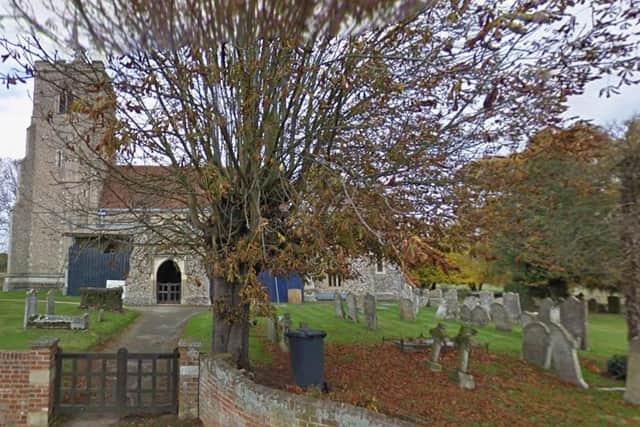
A village primary school in Hertfordshire is set to close at the end of August due to falling pupil numbers, following a nail-biting vote in council chambers.
Albury Church of England Primary School, near Little Hadham, offers 12 places per year group with a total capacity of 84 pupils, but had just 22 pupils in attendance last autumn. This is despite 50 children of school-age group living in Albury, according to census data. Of those 50 children, just 16 attend the village school.
A meeting of Hertfordshire County Council’s Education, SEND & Inclusion Cabinet Panel on Friday heard that if the school was to stay open, it was estimated just 11 pupils would remain on its roll in September.
Councillors voted six in favour of closing the school, with six against. Chairman of the committee, Cllr Mark Watkin, used his casting vote in favour of closure.

Cabinet will consider the panel’s recommendation at its next meeting on February 11. Unless they object, a further four-week consultation period on the proposals will follow before the cabinet ratifies the decision on April 22.
A previous meeting on November 6 saw councillors provisionally agree to the school’s closure, subject to a public consultation. Documents at today’s meeting show a total of 356 responses were received, with the “significant majority” of respondents (96.1%) disagreeing with the closure.
A large crowd of members of the public, including teachers, parents and even some with small children, attend the meeting at Hertfordshire County Council’s head office in Stevenage. The meeting was beset with technical difficulties, with webcasting initially failing to work as dozens of families attempted to watch the meeting online.
Cllr Ralph Muncer (Conservative, Knebworth & Codicote) criticised the absence of three committee members from the meeting, including two Conservatives and one Labour member. He branded the meeting “quite frankly, undemocratic” and drew applause from the public.
Chairman Cllr Watkin responded that legally, the committee had enough members present to proceed with the meeting.
The meeting began with a petition from parent and Albury Parish Cllr Kate Jolly, who said: “I’m moved by the results of the consultation. Ninety-six per cent of people oppose closure; this is unquestionable support, and yet we’re still moving forward.
“Parents are trying to understand what’s happening, ask for clarity and information. The answers have often been incomplete and inconsistent. No bones about it, we’ve been let down. We weren’t engaged early enough, nor were we given the financial picture of what happened before closure was put on the table.
“Pupil numbers declined as a result of a consultation lacking governance, communication and support, really when it was most needed. Parents were forced to act quickly or risk [their children] being put in places within unsuitable, large mainstream schools. This process really is to blame.
“Behind every spreadsheet and statistic are real children, who feel safe and happy at Albury, who walk to school with friends, building independence and thriving in small classes. My daughter is one of those. The idea that this could be taken away, not because all options have been exhausted, but because they were not fully explored, it’s heartbreaking.”
Ms Jolly referred to the school’s ‘Good’ Ofsted rating and a recovery plan put forward by parents.
She added: “The recovery plan may need refining; we’re not experts, but we are willing parents. You have the power to save our school. Grant us the time, work together and allow the recovery plan to be implemented properly.”
Kate Leahy, the council’s head of school planning, said that closing schools was a last resort and revealed that Albury had not been able to balance its budget over the past five years, even when its pupil roll was 54.
She added that the school’s head and governors were not involved in the recovery plan promoted by parents, and that the suggested measures had not yielded results when implemented in the past.
Ms Leahy told the meeting that transition arrangements were already in place for Albury pupils to move to the nearest primary schools, adding that many pupils resident in Albury already attend those schools.
Bishop’s Stortford Rural Cllr Mark Pope, who lives in the village, said: “Yes, numbers are low, but the council’s consultation also confirms that Albury offers a high-quality provision. The last Ofsted inspection judged it a ‘Good’ school, where every child is valued and given the opportunity to flourish.
“Closing a ‘Good’ school is not an educational improvement action. It is purely a numbers-driven intervention. The council states that low pupil numbers have been challenging for schools to operate within budget. That is true, but national evidence shows that closing small rural schools often increases inequality and damages communities.”
The council’s head of school standard and accountability, Tania Rawle, said the school had received significant support from the council, saying: “The budget has been in trouble for at least five years.”
She said work had been undertaken to help the school balance its budget, but this had not been possible, adding: “It’s simply down to pupil numbers not being sufficient to support the school.”
She stated that schools with 60 to 100 pupils should ideally be in a structured governance with support from other schools, while schools with fewer than 60 pupils were a cause for concern.
Cllr Ralph Muncer asked what assessments had been made of the quality of education at Albury and any steps taken to improve it.
Ms Rawle replied that the quality of education had “spikes” at Albury and that this was not unusual in schools with a low number of pupils.
She described some of the difficulties facing schools with small classes containing two or three year groups, but also stated: “The quality of education is not something we’ve been overly concerned with, to be honest.”
Cllr Muncer called for the Church of England to step up its funding and for a year-long deferral for the school’s action plan to be implemented.
Cllr Hillary Skoczylas, deputy head of the committee, disagreed, saying 70% of parents in the catchment area were not choosing the school for their children, adding that cash and money had been injected into the school over five years.
She added: “Fundamentally, it comes to the point of how long do you keep going and keep trying?
“The underlying principle is that there are not enough children choosing to go to this school, [that] doesn’t go away. It’s on that basis and with a heavy heart, I cannot see a viable long-term future for this school.”
Cllr Chris Lloyd addressed parents in the room, saying: “Delaying for a year would extend your pain… your wider community does matter to me, it matters to all of us, that’s why we get involved in politics.”
Cllr Mark Watkin, cabinet member for Education, SEND & Inclusion, said: “We recognise how difficult this situation is for the local communities involved. Decisions of this nature are never taken lightly; they follow thorough analysis and the careful exploration of all possible options to ensure a school’s long‑term sustainability.
“Low pupil numbers create substantial challenges for schools in providing a good education and maintaining financial viability. Our priority is ensuring the best possible educational outcomes for children in Hertfordshire.”