
Wilstone couple talk about losing their daughter to sudden death in epilepsy in film for BBC Lifeline
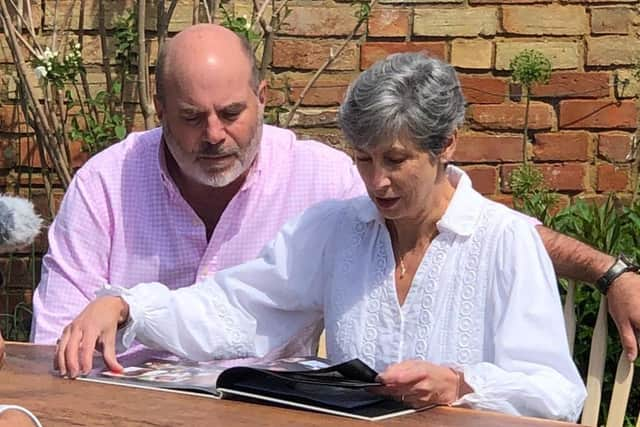
A couple based in Wilstone, near Tring, will be featuring in a BBC Lifeline Appeal film airing this Sunday (30 June), in which they speak about the tragedy of losing their 21-year-old daughter to sudden death in epilepsy, and call on the public to support the Epilepsy Society in its world-leading research.
Hamish and Debbie Roberts speak movingly about the devastating loss of Amelia, who died following a seizure just five years after receiving an epilepsy diagnosis. Amelia had recorded 850 absence seizures in that period, and unfortunately her condition had worsened to a point where she was also having more serious tonic clonic seizures prior to her tragic death.
Before she died, Amelia had signed up to donate her brain for research at the Epilepsy Society Brain and Tissue Bank to help their scientists discover more about the causes of epilepsy. Hamish and Debbie hope that by sharing their story and inspiring people to watch the film and donate to the Epilepsy Society, other families in the future will not have to go through similar heartbreak. They also want to encourage others to donate their brains to the charity.
Every week in the UK, on average 21 people with epilepsy die — some from injuries sustained during seizures, but over half during the seizure itself from sudden death in epilepsy.

Most sudden death in epilepsy happens in young people aged 20-40. Around 80% of deaths occur at night when the person is sleeping, with the type of seizures where a person falls shaking to the floor, tonic clonic seizures, posing the greatest risk.
Sudden death is a key area of research for the Epilepsy Society. With continued support, the Chalfont St Peter-based charity hopes to achieve an ambitious goal of halving epilepsy deaths over the next ten years.
The Roberts family features in the ten-minute film, presented by broadcaster Edith Bowman, alongside two other people with epilepsy from across the UK who talk about how the Epilepsy Society has supported them and their loved ones.
Clare Pelham, Chief Executive of the Epilepsy Society, said: “We are so grateful to Hamish and Debbie for bravely sharing their experiences and encouraging viewers to support our vital work. Amelia’s tragic story really highlights why we are so desperate to raise money for research that could literally save lives. No-one should die because that stigma that surrounds epilepsy means that their condition is less well understood. Our goal is to reduce the number of epilepsy deaths by half in the next 10 years.
“We’re really pleased that our important work is being showcased by the BBC, and hope that many people will watch the film, donate and help save lives.”
The Epilepsy Society’s BBC Lifeline Appeal film is set to be screened 14:05 on 30 June on BBC One, with a follow-up airing at 8:50 on BBC Two on 5 July. It will be available to watch on BBC Iplayer or at BBC One - Lifeline, Epilepsy Society from the launch date up to 21 July.