
‘Fear of spiders saved my life’ says brain cancer patient
A former England footballer was diagnosed with brain cancer after fainting when confronted by a spider.
Amy Carr walked “frantic laps” around her bedroom before collapsing at the sight of a spider and woke up surrounded by paramedics.

Doctors told the then 23-year-old the episode was instigated by a phobia of the arachnid.
Amy, who is fundraising for Brain Tumour Research, said: “I’d never reacted that way to anything before. I knew I didn’t like spiders but blacking out seemed like an extreme response.”
Within 18 months, Amy, from Hemel Hempstead, had two further incidents of blacking out whilst at the gym, without seeing a spider.
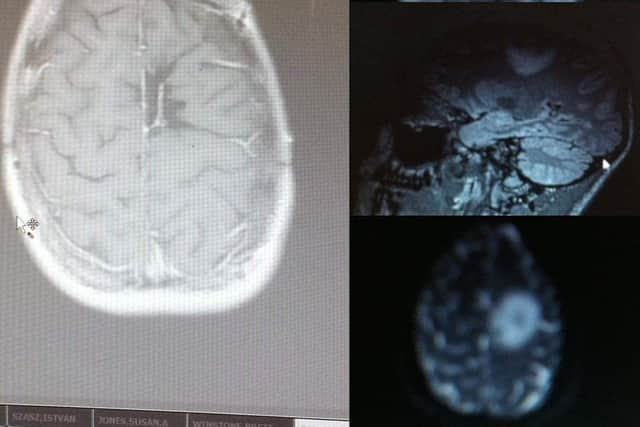
An MRI scan in 2015 found a high-grade tumour the size of a golf-ball growing on her brain, responsible for her seizures.
She had an awake craniotomy which left her unable to walk and talk for eight days. Combined radiotherapy and chemotherapy followed alongside extensive physiotherapy which helped her regain mobility and her speech returned.
Amy said: “I knew the risks that came with surgery, I was warned I could die or be left with life-changing injuries. For a week after I couldn’t walk or talk. The first time I spoke was in response to the nurses asking me how I was. I replied with my GCSE grade C French of comme ci, comme ça. The next day I was back to speaking English. When it came to radiotherapy and chemo, nothing could prepare me from its brutality. During the beginning, I vomited 27 times in two days. It got better but it was hard.”

At the time Amy was diagnosed, she was playing professionally for IL Sandviken in Norway after a four-year football scholarship in Chicago, USA.
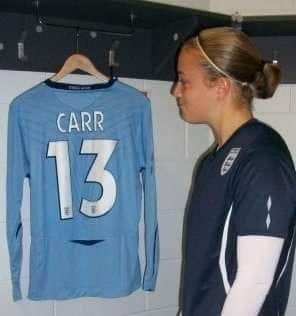
During her footballing career, she earned 16 caps playing in goal for England u17 and u19s also playing for the likes of Chelsea, Arsenal, and Reading.
She is now monitored with regular scans and works as a healthy lifestyle specialist at Active Luton and coaches six -16-year-olds at Goalkeeper Warz in Milton Keynes.
She said: “I used to be able to kick and throw a ball from the goal to the halfway line, now I can’t. I’m still working on my coordination and have worked hard on my fitness, including training for and running long distance.”
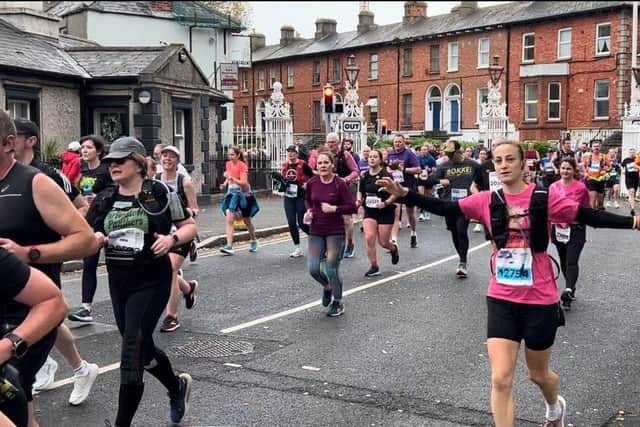
On Sunday (27 October) Amy completed the Dublin Marathon in 4:28 and has raised more than £2,000 for the charity.
Amy added: “There are people I’ve met throughout my diagnosis who have had a huge impact on me. One person in particular, Kelly, I met in the same hospital ward after my surgery. She inspired me to fundraise for Brain Tumour Research.
“I found the lack of support after treatment, tricky to navigate. That’s the reason I took up a career supporting people during their rehab. I even wrote a book for families so they have an insight into what they might expect with a loved one going through a brain tumour diagnosis. I don’t want anyone else to go through what I have and the only way we can do that is why investing money into researching brain tumours.”
Brain tumours kill more children and adults under the age of 40 than any other cancer,
yet just 1% of the national spend on cancer research has been allocated to this devastating disease since records began in 2002.
Charlie Allsebrook, community development manager at Brain Tumour Research, said: “Amy’s story is a reminder that brain tumours are indiscriminate; they can affect anyone at any age. Amy has shown incredible resilience, determination and generosity in not only sharing her own experience of the disease but supporting the community through her marathon fundraising efforts. We’d like to congratulate Amy on completing the Dublin Marathon and wish her well for her future scans.”
Brain Tumour Research funds sustainable research at dedicated centres in the UK. It also campaigns for the Government and larger cancer charities to invest more in research into brain tumours in order to speed up new treatments for patients and, ultimately, to find a cure. The charity is the driving force behind the call for a national annual spend of £35 million in order to improve survival rates and patient outcomes in line with other cancers such as breast cancer and leukaemia.
To donate to Brain Tumour Research via Amy’s Dublin Marathon fundraiser, please visit: www.justgiving.com/page/amy-carr-9166