
Planning permission rejected for 476-home development in Hemel Hempstead
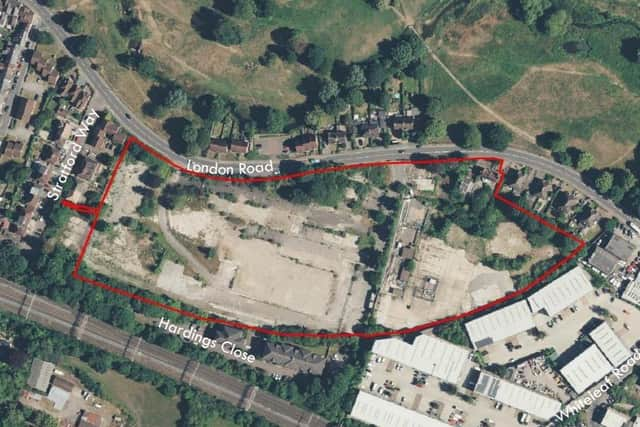
A developer has been denied permission to build 476 homes on a former gasworks site close to Hemel Hempstead railway station that has been derelict for most of 30 years.
Dacorum Borough Council’s planning committee voted against granting permission on Thursday (12 December) despite officers recommending approval of the development, despite officers warning councillors they risked costs being awarded against the council if it goes to appeal, and despite Dacorum having one of the lowest housing land supplies in the country.
A representative from developer Berkeley Homes confirmed at the meeting they would appeal the decision, and committee chair Councillor Garrick Stevens even raised the prospect of it going to a government minister for a final decision. Dacorum currently has a housing land supply of only 1.69 years, well below the required minimum of five years, and the gasworks site has been identified in the borough’s draft Local Plan as a “brownfield regeneration opportunity”.
Under new planning reforms announced yesterday, Dacorum will have a new government target of building 1,355 homes per year, significantly higher than the 630 homes that were built on average each year between 2021/22 and 2023/24. There was a farcical end to the four-hour planning committee meeting after councillors first voted against granting permission, and then voted against refusing permission.

It was only finally rejected after a third vote was taken, which cited different reasons for refusal. On the first vote, five councillors (Councillors Alan Anderson, Fiona Guest Stewart Riddick, Caroline Smith-Wright and Philip Walker) voted against granting permission with four voting in favour (Councillors Edward Barradell, Ian Bristow, Jan Maddern and Brian Patterson). Chair Councillor Stevens and Councillor Angela Mitchell abstained.
A discussion then took place on whether to delay a decision or refuse permission, with a vote taken on the latter option. There was only one change to the two camps, with Councillor Stevens voting against refusing permission to make it five votes apiece and then using his casting vote as chair to prevent the proposal from passing.
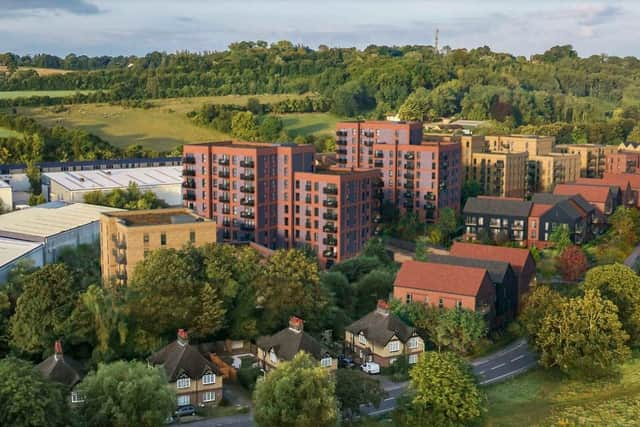
Councillors had cited the height of the buildings – up to ten storeys tall in places – as a reason for refusal, as well as over-development of the site and the prospect of nearby properties losing light. A final vote was then taken with only the building height cited as the reason for refusal, and this time it was carried by six votes to four – with Councillor Stevens abstaining and Councillor Mitchell, who had previously said the lateness of the hour made it difficult to come to a decision, adding her name to those five who had consistently voted against the application.
They made the decision despite a warning from a council officer that he was “extremely concerned” that a refusal could lead to costs being awarded against the council if an appeal was successful. Councillor Anderson, who proposed refusing the development, said “sometimes we’ve just got to stick to principles”. He had earlier said that refusal of another application, relating to Haresfoot farm, would have been “very unwise, particularly on the cost front”, if there were not “legal grounds” for it.
The committee’s decision comes just days after the government proposed reforms which would delegate more planning decisions to officers, saying it would help prevent developments being rejected against officer advice “only to be overturned on appeal, delaying appropriate development and wasting taxpayers’ money”.
The 476 one- and two-bedroom flats planned for the former Hemel Hempstead gasworks site would have been spread across 11 blocks, and there would have been 273 parking spaces, all of them unallocated. Eight per cent of the homes – 39 of them – would have been available at affordable rates, according to the government definition of the term.
That is well below Dacorum’s expectation of 35 per cent of homes being affordable, but the developer said the project would not have been financially viable with a higher percentage of affordable homes, given decontamination costs involved in making the old gasworks site suitable for housing.
Council officers accepted the developer’s viability claim, and said the eight per cent of affordable housing that had been included was “welcome”. Councillor Riddick had expressed concern about the amount of affordable housing. He said: “Our standard is 35 per cent, which means that really what we need on this particular site is not 39 units, but 166 units … If that’s our standard, I don’t see why we should vary it. That’s either our standard or it isn’t.”
Several councillors, including Councillor Riddick, worried that the amount of parking – despite meeting standards for the site’s location – would not be enough. Cllr Riddick said it would be an “absolute disaster” because “people will not give up the holy car”, while Cllr Anderson said it was not in a “sustainable” location where you could “design out the car”, and added the developer should have considered including a multi-storey car park in its plans.
Councillor Anderson said development of the site had been talked about ever since he first became a councillor in 1999. He said he “supports the principle of redeveloping the site” but would not be able to support this application because “the buildings are too high”. “All you have to do is take two or three storeys off … and it would make a big difference,” he added. The blocks would have varied in height from three storeys to ten storeys.
On the other side of the debate, Councillor Baradell reminded his colleagues there is a “desperate need for more homes in the borough” and said: “It’s developments like this that will ultimately reduce the need for … developing green belt sites in the rural areas of our borough. It’s fantastic to see something like this … that’s next to the station [with] great connections.”
Councillor Smith-Wright said she had a “real problem” with the design which, she said, had “too many” buildings that were “too high”. She suggested a developer with “bigger pockets” was needed to “decontaminate [the land] … and then build appropriately”. Councillors also discussed how long the site had been derelict for, and reached a consensus that the gasworks had closed around the early 1990s, with the site briefly used around 2012 for other purposes. The gasworks and associated buildings have all been demolished.