
56-home development near Berkhamsted delayed over community hub concerns
A decision on whether a proposed housing development in Hertfordshire can be built has been delayed – after councillors told the developer to get rid of a planned community hub.
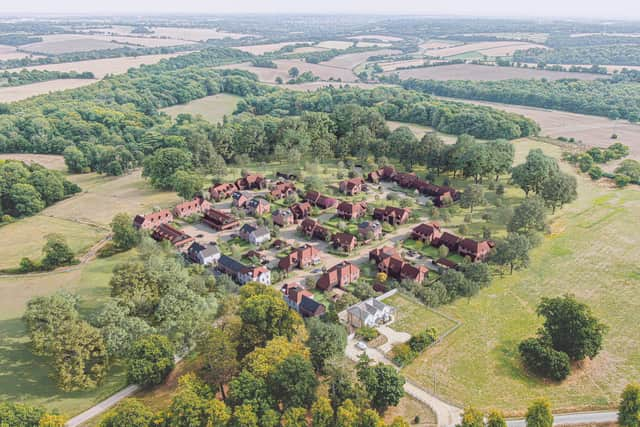
Haresfoot Ltd, a partnership between Griggs Homes and Galliard Homes, want to build 59 homes and a community hub on Haresfoot Farm near Berkhamsted.
Originally, the developers hoped to build 86 homes on the site, but Dacorum councillors refused planning permission in May – meaning they had to make adjustments before bringing a new application forward.
In response, the developers removed 27 homes from the plan and made further changes to improve the site’s sustainability.
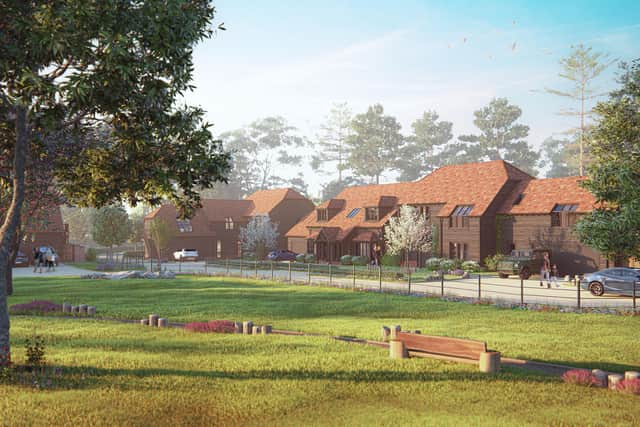

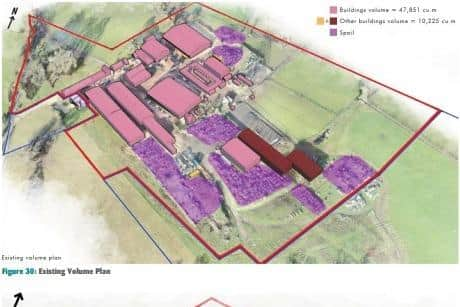
The changes, brought before Dacorum Borough Council’s development management committee on Thursday (3 October), meant homes would only be built on parts of the site classed as ‘previously developed’ by officers. It is currently used commercially for purposes such as storage of film and TV props and scenery.
But, despite officers recommending that councillors approve permission, they refused to grant it for a second time by six votes to five – this time raising new concerns about the proposed community hub building.
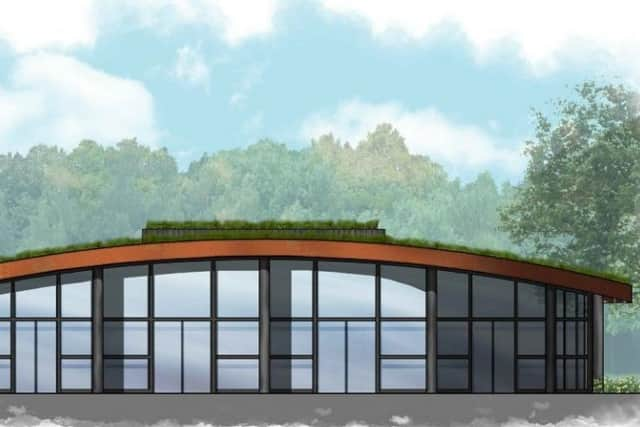
The hub would have been available for a variety of uses, including groups, exercise classes, and remote working, and would have included a pantry with special vending machines stocking everyday essentials.
But several councillors raised concerns about the proposed building’s viability.
Councillor Jan Maddern (Ind, Nash Mills) worried it was a “hugely expensive part of the development” and said: “I’ve seen these things fail … in developments which are so much bigger.
“I’m really concerned about how a hub could possibly be viable on a tiny development.
“How are these few houses going to attract enough people to make a hub worthwhile or pay its way?”
Her concerns were shared by Councillor Philip Walker (Con, Bovingdon, Flaunden and Chipperfield) who said: “I just don’t see how, financially, that will work.
“In a few years time, if this hub concept doesn’t work, then the building will sit there … fees will ramp up all the time.
“It’s a lovely idea to have a concept where people can go to the hub to pick up their eggs and milk, but I think you have to accept that if you build housing away from shops, people will use their cars.
“I can see it becoming a big white elephant, and an expensive white elephant, and it scares me.”
He suggested “building another couple of affordable units on the site” – a recommendation the developer is now planning to implement after councillors voted to defer a final decision.
Meanwhile, Councillor Brian Patterson (LD, Tring West and Rural) suggested the pantry idea was “out of kilter” with the high percentage of affordable homes on the site who “wouldn’t want to use it” if it was more expensive than a supermarket.
24 of the 59 homes – 40 per cent of the total – would be classed as affordable, according to the government definition of the term. Half would be available for shared ownership, and half for affordable rent.
While affordable rent requires a property to be available at up to 80 per cent of market rates, these would be available at 60 per cent of market rate. Priority could be given to existing Berkhamsted residents.
The hub would have been run by an estate management company, which would have received the expected service charge of between £500 and £1,000 per year per property.
A council officer said the 60 per cent rate for affordable homes included service charges so “larger properties would be footing more of the bill”. He added that if the hub were to become unviable “there would be options to apply to repurpose it for something else”, and that he “couldn’t imagine” a situation where it lay empty.
The hub was part of a “package of measures” to reduce car travel and make the site, which would be accessed by White Hill road, more sustainable. These included funding an electric car club, providing communal electric bicycles, and relocating a bus stop with a new shelter. The stop would be served by the HertsLynx on-demand service.
A council planning officer said the affordable homes would be “genuinely affordable” and the site was “as sustainable as it can be”. He added that at least four registered housing providers are interested in managing the affordable housing on the site.
Councillor Nigel Taylor (LD, Berkhamsted East), who does not sit on the committee, said the site’s rural location was “unsuitable”. He said White Hill was “incapable of handling more than a trickle of cars” and the development is “designed for the car and will only make Dacorum’s traffic problems worse”.
But officers estimated the development would instead lead to the equivalent of 274 fewer car journeys being made to and from the site each day when compared to its current commercial use. Hertfordshire Highways did not object to the proposal.
Councillor Taylor, along with two public objectors who spoke at the meeting, suggested the site should not be classed as ‘previously developed’ given its use as a farm. Officers, however, found the development would lead to “an overall improvement in openness” compared to the site’s current state.
The site was previously refused permission because it was deemed an “inappropriate development” on the Green Belt, and because it was deemed an “unsuitable” location for housing given its distance from amenities.
Oliver Myrants-Wilson, land and planning director at Griggs Homes, told the Local Democracy Reporting Service: “We are disappointed that, despite months of hard work and close collaboration with planning officers before and after submission, councillors did not support their officer’s recommendation to approve our application.
“This is particularly frustrating given that we addressed all concerns raised from the first submission, ensuring compliance with both local and national planning policies, and there were no technical objections from statutory consultees.
“However, we are thankful to the planning officers for their efforts and to the committee for their pragmatic decision to defer the application.
“We will continue to work closely with the planning team and intend to replace the proposed community hub with two affordable housing units, addressing the concerns raised by committee members.”
The Haresfoot Farm site is not allocated for development in Dacorum’s emerging Local Plan, but council officers noted the Plan requires building a significant number of properties on ‘windfall’ sites – those not previously identified for development – to meet its housing targets. In Berkhamsted, this means 302 ‘windfall’ homes are required to be built between 2026 and 2041.
Dacorum currently has a housing land supply of only 1.69 years – well below the required minimum of five years. It means planners have to apply a ‘tilted balance’, and can only block developments if the negatives “significantly and demonstrably” outweigh the benefits.